
Water left behind: start with the trail
If a floor scrubber leaves a wet trail, first stop the cleaning route and keep people away from the affected area. A narrow streak, water across the full cleaning path and water appearing only during turns are different observations. Recording that difference is more useful than immediately ordering a new vacuum motor or increasing the solution flow.
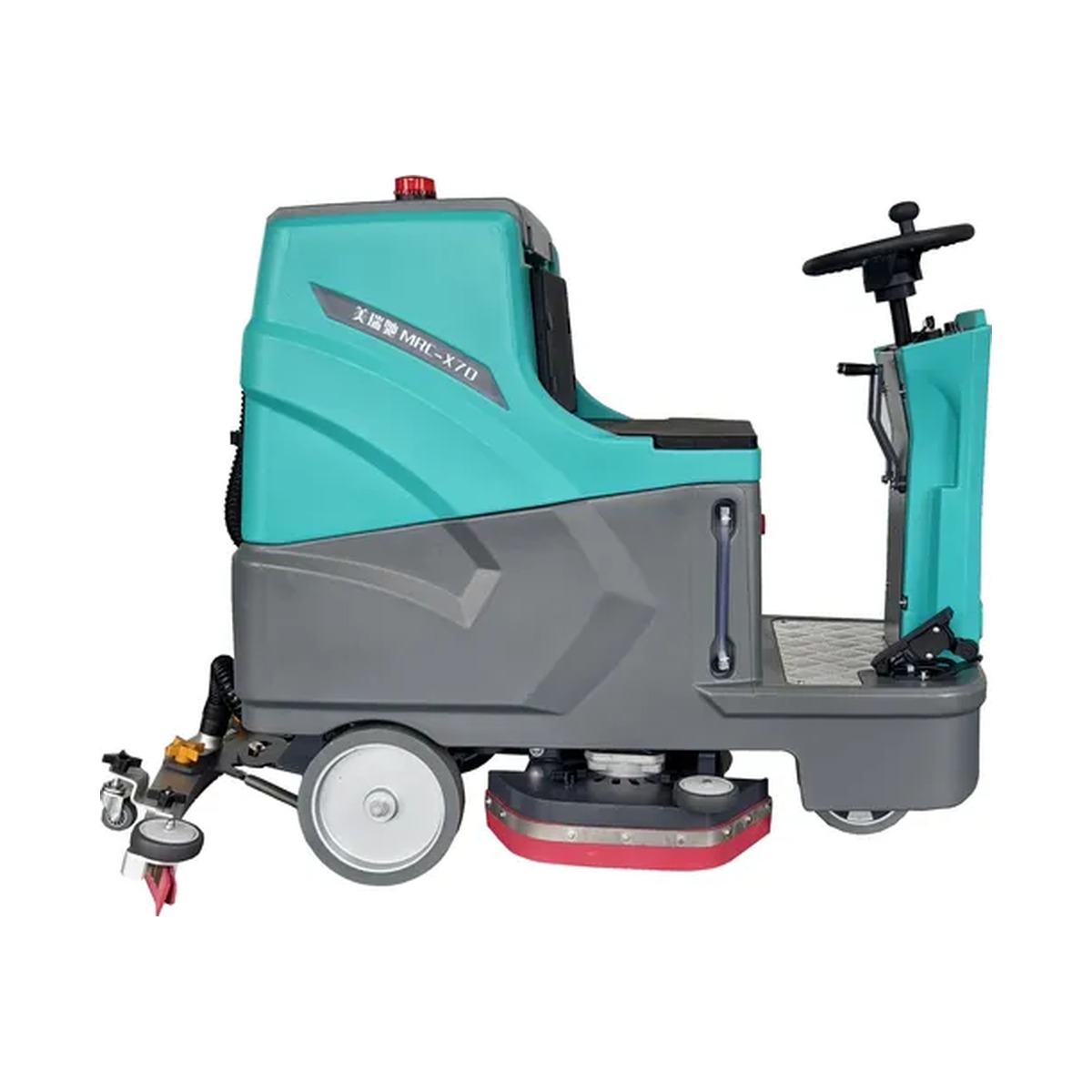
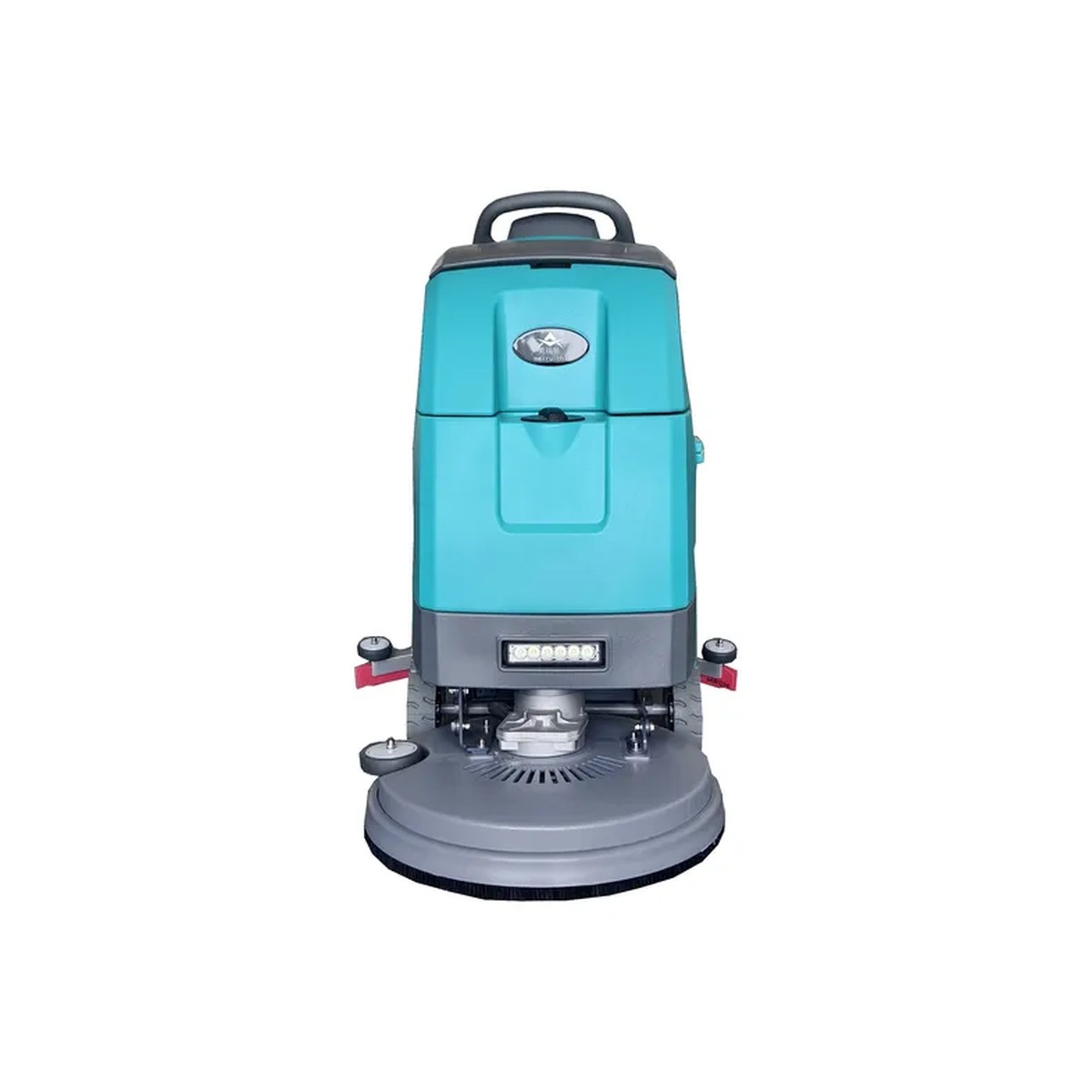
This guide helps owners of the MRCH X50 walk-behind scrubber and MRCH X70 ride-on scrubber organize permitted operator checks and prepare a clear service enquiry. The two models share a cleaning task, but their fitted recovery assemblies and replacement parts must be identified separately. Use the operating instructions supplied with your exact machine before removing, adjusting or cleaning a component.
Separate three kinds of water-pickup problem
| What you observe | What to record | Question to investigate |
|---|---|---|
| A narrow, repeatable streak | Position relative to the machine and a close photograph of the accessible blade edge. | Is there trapped debris, a damaged contact edge or a floor defect? |
| Water across much of the path | Tank status, warnings and whether the recovery system was operating normally. | Does an approved tank, connection or recovery check explain the loss of pickup? |
| Water mainly at corners | Turn direction, route speed, floor joints and the space available. | Is the operating route exceeding the practical pickup arrangement? |
These observations narrow the discussion; they do not diagnose a fault by themselves. Several causes can occur together. For example, an obstructed route may force repeated turns while debris also collects along a blade. Write down what changed after each approved check so that the service team can distinguish a persistent fault from a route-specific problem.
Check accessible debris before changing settings
Park and isolate the scrubber as directed in its manual. Inspect accessible recovery components only within the operator procedure. String, labels, grit or other material caught along a contact edge can interrupt water collection. Remove debris using the approved cleaning method, keeping hands away from sharp material and moving components.
Do not judge blade condition while it is covered in residue. Clean the accessible part first, then look for an uneven edge, tears or other visible damage. Photograph the cleaned condition if replacement may be needed. A photo that includes the complete assembly and a second close view is more informative than an extreme close-up with no model identification.
Tennant’s squeegee checklist highlights the importance of blade selection and condition in floor-scrubber performance. Apply that principle through the MRCH machine’s own instructions. A blade material or adjustment shown for another manufacturer’s machine is not automatically an approved choice for an X50 or X70.
Review the recovery path as a connected system
The blade is one part of the recovery arrangement. Review the recovery-tank state, accessible hose connections, covers and other operator-check items identified in the manual. A clean blade cannot compensate for a separate problem that prevents the machine from recovering water.
Describe whether pickup deteriorated gradually, stopped suddenly or changed after the tank was emptied. Note any displayed warning exactly. Do not repeatedly restart a machine with an unresolved fault, bypass a protective device or dismantle electrical components. When permitted checks do not restore normal operation, make the machine unavailable for cleaning and request service advice.
Keep chemical use in the record. Send the detergent name and the dilution actually used, together with any unusual foam observed. Do not improvise an additive or assume more detergent will improve recovery. The cleaning product must suit both the floor and the equipment, and its instructions must agree with the machine procedure.
Distinguish floor and route effects from component wear
Mark the location of the wet trail on a simple route sketch. Does it appear on smooth sections as well as joints? Does it recur at the same floor repair? Does it begin when the operator turns around a pillar? These details help separate conditions associated with the surface from a problem that follows the machine everywhere.
For an MRCH X70, include the route around the complete machine and recovery assembly when assessing a turn. For an X50, include the space used by the operator as well as the equipment. Neither a ride-on format nor a walk-behind format removes the need for a suitable working path. Cleaning width alone does not describe that space.
If the manual permits a check pass after care, use a controlled, accessible area and the approved setup. Inspect the floor before reopening it. A visually improved result in one small area does not prove the complete route is ready; inspect the places where the original problem appeared.
Order the correct blade or assembly
Start a parts request with the model, serial number and existing part number where available. Add the quotation or purchase reference if the machine was supplied with a particular configuration. The name X50 or X70 identifies a product family, but production revisions and supplied components still need to be matched.
Ask whether the quotation covers an individual blade, a matched blade set or the complete assembly. Confirm the mounting arrangement, included hardware and the relevant installation instructions. Do not substitute an item solely because its length appears similar. Keep the supplier’s compatibility confirmation with the machine record for future orders.
| MRCH machine | Information to send | Confirmation to request |
|---|---|---|
| X50 walk-behind floor scrubber | Identification plate, whole rear assembly and cleaned contact-edge photographs. | Correct X50 configuration, blade set and operator-replaceable items. |
| X70 ride-on floor scrubber | Identification plate, assembly mounting points and description of the wet trail. | Correct X70 configuration, compatible parts and any technician-only adjustment. |
Keep a short pickup-performance record
A useful record contains six entries: machine identification, floor zone, symptom, approved checks completed, result of the check pass and current availability. Include the date and operator. A short consistent record is easier to use than a long maintenance form filled with ticks that do not describe what happened.
For example: “X50, aisle C, narrow streak on the left after a straight pass. Accessible blade cleaned under the operator instructions. Streak remains in the same position on the check area. Photos attached; machine held for review.” This is an example of reporting, not an account of an MRCH customer incident or a diagnosis of a particular part.
If a problem recurs after a replacement, retain the old part identification and the installation date. Compare the route, residue and cleaning product used before and after the change. Repeatedly buying the same consumable without reviewing the operating conditions can leave the underlying cause unresolved.
Build pickup checks into normal care
Add an accessible recovery inspection and a record of defects to the machine’s approved before-use and after-use routine. Follow the supplied cleaning, storage and service instructions rather than a universal replacement calendar. The correct action depends on the component condition and the manufacturer’s criteria for that configuration.
Use our floor scrubber maintenance checklist to organize the shift handover. For replacement identification and documentation, read the MRCH spare-parts ordering guide. If the wet trail remains after permitted checks, send MRCH the model, photos and observation record before returning the machine to the route.
Questions about scrubber water pickup
Does a wet trail always mean the blades need replacing?
No. Blade condition is one consideration, alongside accessible debris, the recovery arrangement and the working surface. Record the symptom and follow the model’s approved checks before choosing a replacement.
Can X50 and X70 blades be interchanged?
Do not assume compatibility. Ask for the correct part against the model, serial number and fitted assembly, even when two components look alike in photographs.
Should the machine keep working while leaving water?
Stop the affected cleaning task, control access to the wet area and investigate using the approved procedure. Reopen the route only after its condition has been checked and the machine is suitable for use.