
Ride-on or walk-behind: the quick answer
Choose between a ride-on and a walk-behind floor scrubber by checking the complete cleaning route, the available working window and the operator’s task. A ride-on format is worth comparing for long, open routes. A walk-behind format is worth comparing where shelving, doors and frequent turns shape the work. Neither description replaces a check of the actual machine dimensions, cleaning tool and floor compatibility.
A large building can contain a small, difficult route. A smaller building can contain a long, unobstructed route. Start with those differences before using total floor area to shortlist equipment. This guide explains how to compare both formats for a warehouse, factory, garage or commercial building, then turn the result into a useful equipment enquiry.
Compare the work, not just the machine size
| Decision | Ride-on format | Walk-behind format | What to verify |
|---|---|---|---|
| Operator position | Operator travels on the machine. | Operator guides the machine while walking. | Controls, visibility and training for the exact model. |
| Route pattern | Compare for longer continuous runs. | Compare for interrupted routes and tighter access. | Doorways, aisle ends and the journey from storage. |
| Working width | Available widths depend on the model. | Available widths depend on the model. | Cleaning path and full width with the squeegee fitted. |
| Shift planning | Evaluate route coverage alongside servicing stops. | Evaluate walking distance alongside servicing stops. | Refilling, emptying, charging and cleanup time. |
| Purchase comparison | Consider the full operating arrangement. | Consider the full operating arrangement. | Included battery, charger, working tools and consumables. |
Tennant’s floor-scrubber selection guide also distinguishes congested routes from larger open spaces. That is useful general selection context; features of the machines described there should not be assumed to be present on an MRCH model.
Measure access in the order the operator uses it
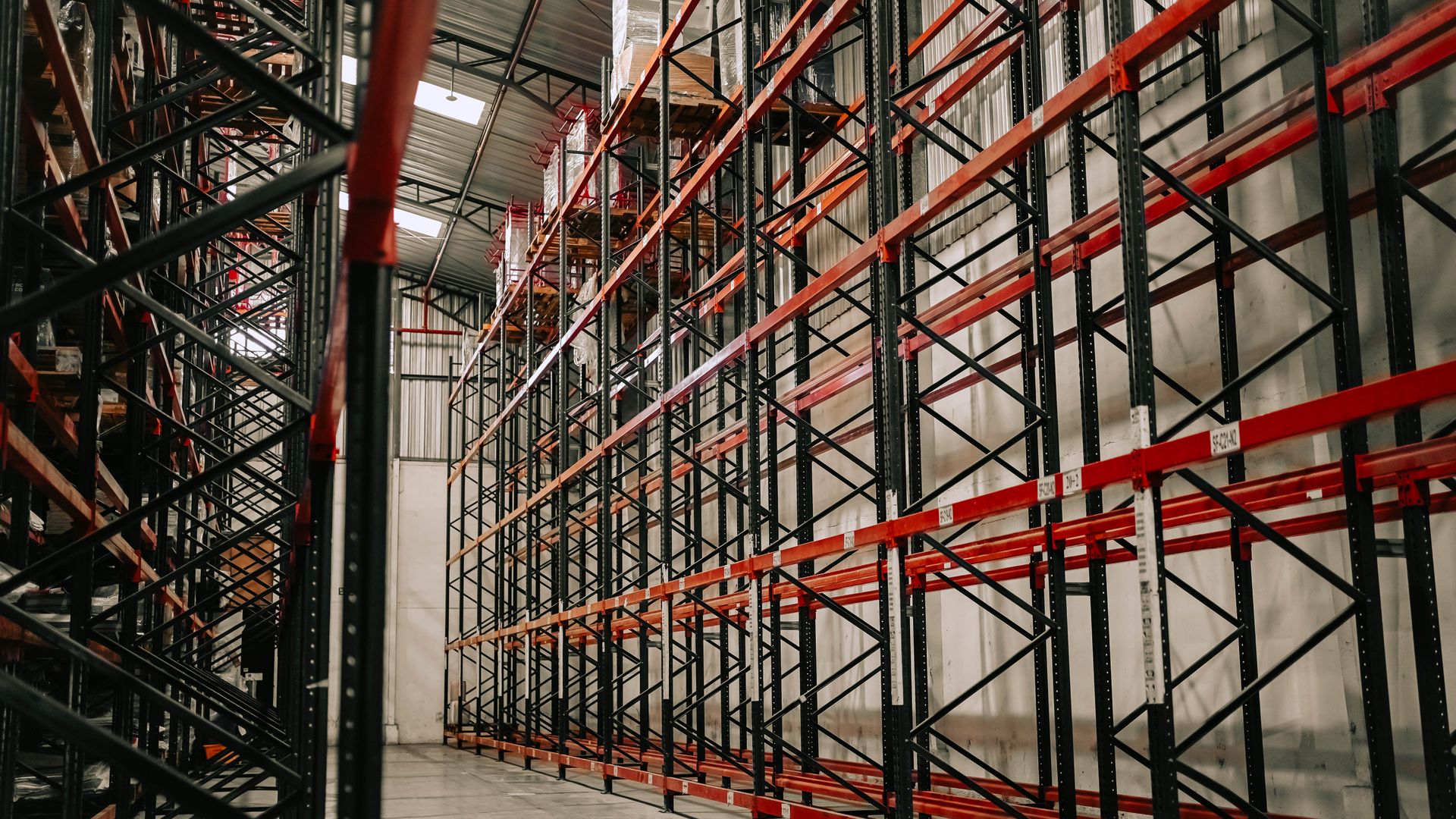
Begin at the storage location. Follow the route through the first door, past any loading threshold, into the working area and back to the emptying point. Write down the narrowest opening on that entire journey. Measuring only the aisle to be cleaned can overlook the doorway that prevents the machine reaching it.
Record usable clear width with doors in their normal operating position. Photograph handles, protective barriers and projecting shelving. At an aisle end, measure the available turning space with pallets and stock where they normally stand. A route that works in an empty demonstration area may behave differently during a normal shift.
Ask for the overall dimensions of the proposed configuration, including its working attachments. Cleaning-path width describes the strip treated by the cleaning head; it is not automatically the width of the complete machine. Confirm overhead clearances, access restrictions and any route gradient against the manufacturer’s instructions for the exact model. Do not infer these from a product photograph.
Compare a complete shift with a simple time budget
Rated cleaning output helps describe a machine, but a buyer needs to know whether the assigned route fits the available window. Separate productive cleaning time from preparation, travel, interruptions and end-of-shift care. Keep these categories the same when comparing proposals so that one supplier’s estimate does not quietly omit work included by another.
For illustration, suppose a site provides a 120-minute cleaning window. Its team budgets 10 minutes for preparation, 15 for travel and moving obstructions, 15 for water handling, and 10 for machine cleanup. That leaves 70 minutes for the planned cleaning passes. These figures describe an example schedule, not MRCH machine performance or a recommended allowance for every facility.
If the measured route does not fit, investigate the cause. A larger tank might reduce some water-handling stops, but it will not remove a blocked aisle. A different route sequence might solve a scheduling conflict without changing equipment. A ride-on machine also needs enough accessible work to make its operating format useful.
Use a timed demonstration where practical. Note the operator, tool, floor, residue, route and starting battery condition. Include the return to storage and final cleaning of the machine. Our guide to planning the cleaning window provides a starting point for organizing these observations.
Check the floor and residue before choosing the tool
The operating format does not determine whether a machine can clean a particular surface. Identify the floor material and finish, then describe the residue. Smooth coated concrete, textured tile and damaged joints create different questions about tool contact, cleaning chemistry and recovered water. Obtain the floor supplier’s care instructions if the coating or finish is uncertain.
Ask which brush or pad is included and why it suits the proposed work. Agree on a small test area and the appearance expected after cleaning. Do not increase chemical concentration or choose a more aggressive pad simply because a mark survives the first pass. The remaining mark may require a different process, or it may be damage rather than removable soil.
Separate oversized packaging, straps and other loose items from wet scrubbing. Where route-based debris collection is the main task, compare an appropriate sweeper as a separate decision. See our scrubber, sweeper and vacuum guide for the differences between these jobs.
Compare ownership costs with the same assumptions
Request a written configuration list before comparing purchase prices. It should identify the model, battery arrangement where applicable, charger, brush or pad holder, squeegee components and accessories. Ask which consumables are included initially and which should be ordered separately. An apparently lower quotation may cover a different package.
Build an operating estimate using your own labor rate and observed route time. Keep water, chemistry, consumables, energy and scheduled service as separate lines. State the number of cleaning shifts per year. Avoid treating an estimated saving as established until the assumptions have been checked against the site.
Consider an illustrative comparison in which one tested arrangement requires 1.5 operator-hours per shift and another requires 2.0. Across 250 shifts, the difference is 125 operator-hours. Multiplying that difference by the site’s actual hourly labor cost gives one component of the comparison. It says nothing by itself about purchase payback, service costs or whether either machine meets the cleaning requirement.
When one facility needs two approaches
A distribution center may have broad dispatch lanes and narrow pedestrian areas. A retail site may combine an open entrance with tightly arranged displays. Consider whether these zones should be assigned separate equipment or different cleaning schedules. Requiring one machine to reach every small corner can distort the choice for the main route.
List the area that each proposed machine can actually reach. Identify edges, steps and restricted rooms that require another method. The final plan should say who handles those areas and when. A successful equipment purchase supports the whole cleaning task, including the parts that remain outside the machine’s route.
Build an MRCH shortlist
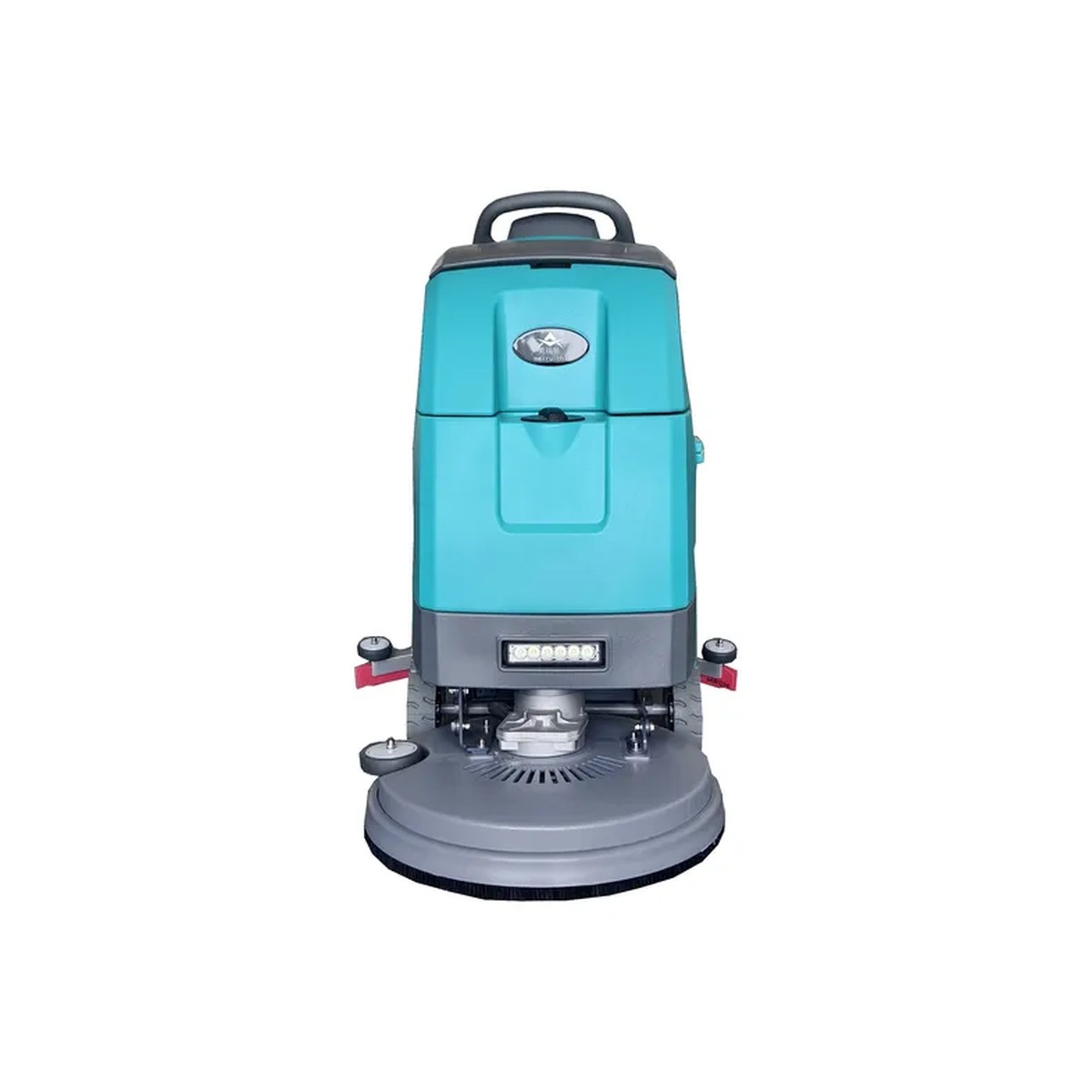
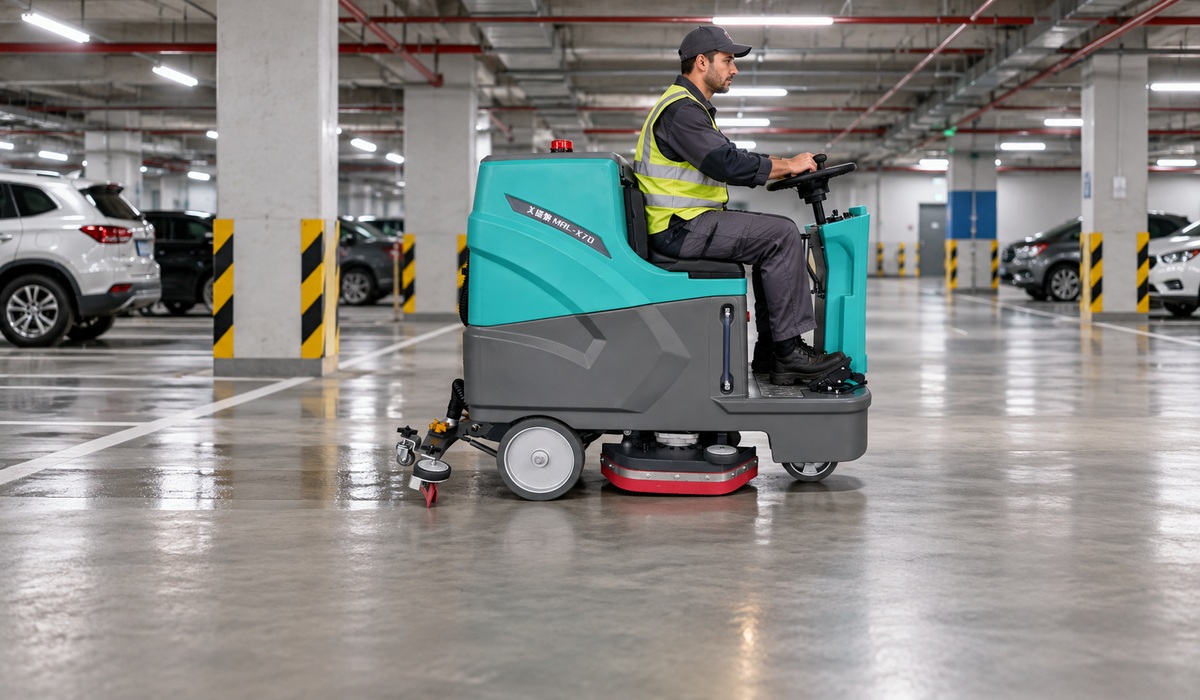
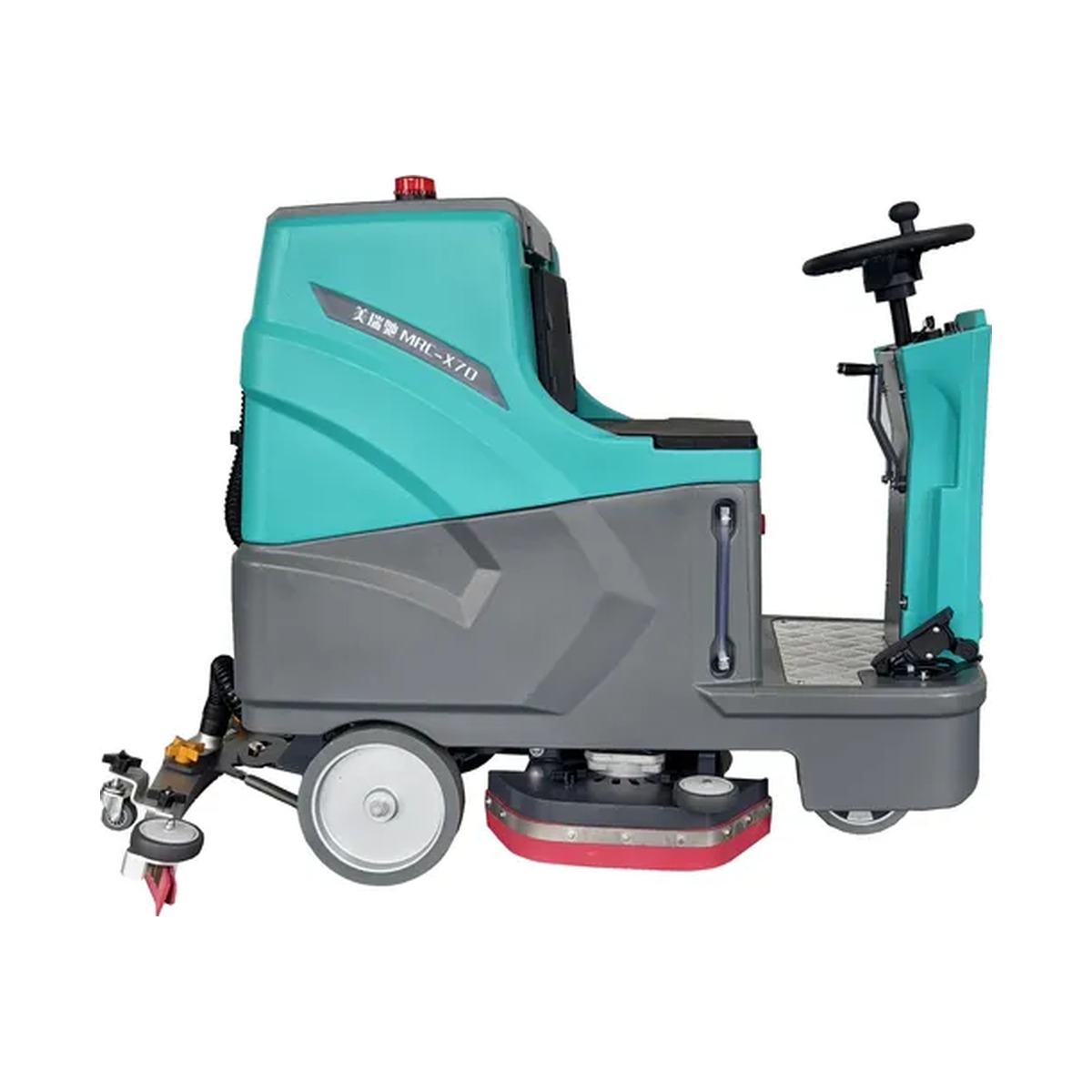
Start with the MRCH ride-on floor scrubber range and the walk-behind range. The MRCH X70 and MRCH X50 provide model-specific starting points for the two operating formats. Review their current product information and request confirmation of the proposed configuration.
- Send a route sketch with the narrowest doorway and turning area marked.
- Include photographs of the floor finish and typical residue.
- State the usable cleaning window and expected cleaning frequency.
- Identify the water, emptying, charging and storage locations.
- Give the quantity, delivery country and documentation needed for quotation.
Use the site-survey checklist to prepare your brief, or send your requirements to MRCH. Ask the team to identify any assumptions still needing site confirmation before you approve the model.
Questions buyers often ask
Is a ride-on scrubber always faster?
No single comparison applies to every route. Access, turns, interruptions, tool configuration and servicing time all affect the completed task. Compare a timed route under equivalent conditions rather than assuming the operator position determines the result.
Does a walk-behind machine always fit narrow aisles?
Check the exact dimensions and working attachments. The category name does not guarantee access. Include the operator’s space and the room needed to turn, recover water and leave the aisle.
Can I choose from floor area alone?
Use floor area to describe the scale of the task, then add the route, surface, residue and schedule. A floor-area figure is a starting input, not a complete equipment specification.