
Start with a floor plan and a cleaning task
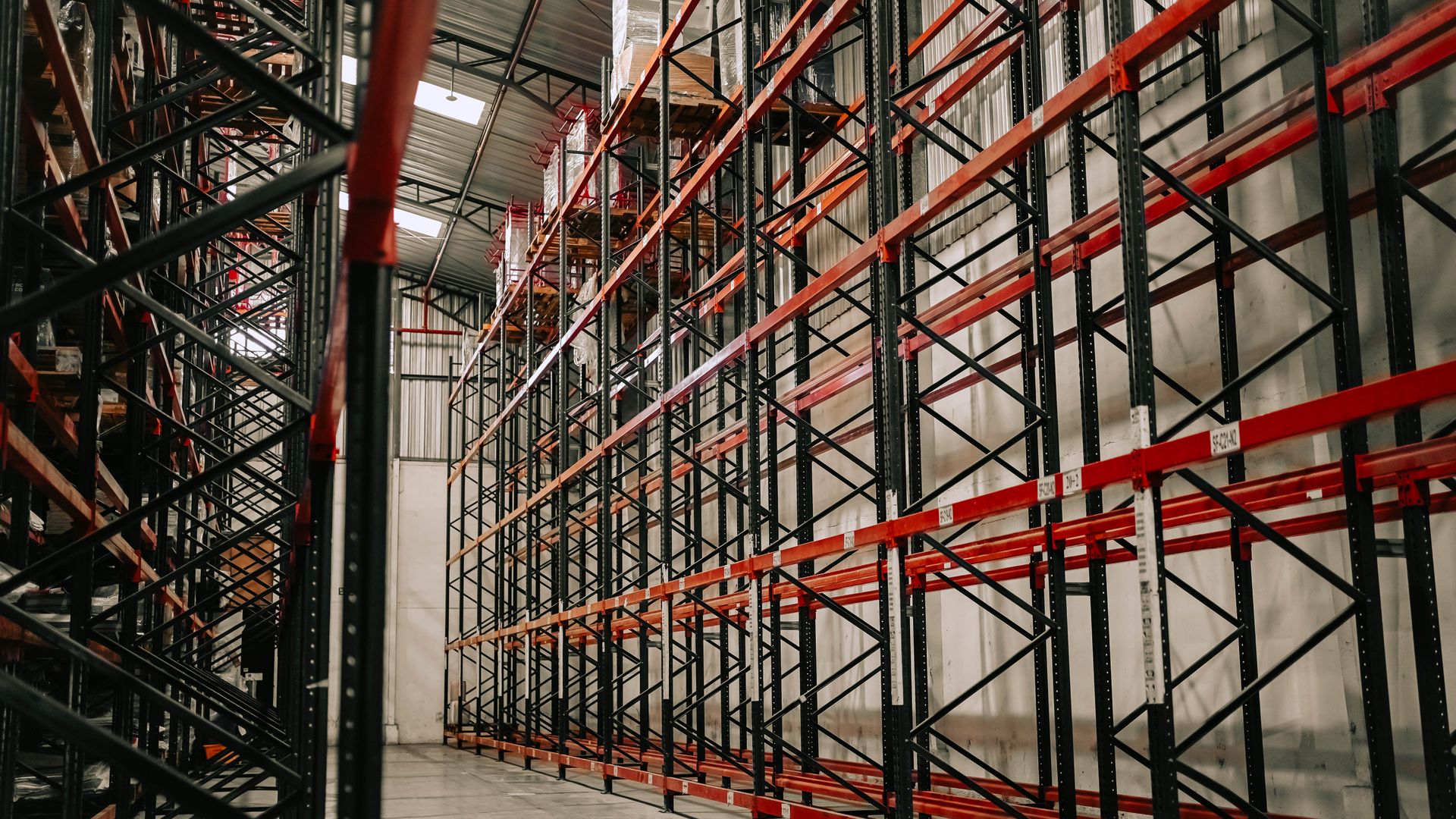
To clean a warehouse floor effectively, separate loose debris collection from wet scrubbing, identify the floor finish, plan access around operations and check the result before reopening the route. The right machine depends on what needs removing and where it has to travel. A photograph of a large warehouse does not provide enough information to specify equipment.
This guide is for warehouse managers, facilities teams and buyers preparing a floor-cleaning plan. It covers routine route cleaning and the information needed to compare equipment. Unidentified spills, hazardous materials and damaged floors need their own site-approved procedures; they should not be absorbed into a general machine-cleaning routine.
Begin with the MRCH warehouse and logistics application guide if you are still organizing the project. The steps below turn that initial brief into a repeatable operating plan.
1. Divide the warehouse into useful zones
Mark storage aisles, loading doors, dispatch space, pedestrian routes and any production or packing areas on a simple plan. Add the machine storage point, water supply, approved emptying location and charging area. Then draw the journey connecting them. This shows travel and service requirements that a total floor-area figure misses.
For each zone, record the usable area, typical residue, cleaning frequency and times when it is accessible. Note recurring obstructions such as pallets waiting for dispatch. Ask the operations team when those obstructions can be moved, rather than assuming a clear route throughout the shift.
| Zone | Observe | Planning decision |
|---|---|---|
| Loading doors | Tracked-in dirt, packaging and changing traffic. | Separate collection tasks and coordinate access with loading. |
| Storage aisles | Clear width, aisle-end turns and stock positions. | Confirm full machine access and an agreed route sequence. |
| Open dispatch area | Continuous floor space and temporary staging. | Identify the actual cleaning window rather than an empty-plan assumption. |
| Pedestrian areas | Doors, barriers and people moving between zones. | Plan separation, signs and reopening checks under site procedures. |
| Packing stations | Small offcuts and material near equipment. | Assign point collection and difficult edges to an appropriate separate method. |
2. Identify the floor surface and finish
“Concrete floor” is not a complete surface description. Establish whether it is unfinished, sealed, polished or coated, and obtain the relevant care instructions. Note repairs, damaged joints, uneven patches and markings that should be preserved. Record areas with a different finish even when they are in the same building.
Ask the floor or coating supplier about compatible cleaning products and tools. If documentation is missing, resolve the uncertainty before treating a large area. A small controlled test can help assess a proposed method, but it should be planned with someone who understands the surface and the intended acceptance criteria.
Photograph both a representative area and the most difficult residue. Include a close view and a wider view showing its location. Label each image with the zone and the observed material. This is more useful for an equipment enquiry than a collection of unlabeled photographs of the entire warehouse.
3. Remove loose and oversized material first
Separate straps, wrapping, large cardboard pieces and other oversized items through the site’s collection process. Do not expect a scrubber dryer to handle arbitrary packaging simply because it has a rotating cleaning tool. Make this preparatory task part of the route assignment so that it is completed consistently.
For suitable loose debris distributed along a route, compare the relevant sweeping arrangement. For material around a workstation or in restricted locations, compare an appropriate vacuum or another approved point-cleaning method. Specify the material and required collection method before selecting equipment; the term industrial does not establish suitability for every dust or liquid.
Kärcher’s warehouse-cleaning guidance distinguishes loose-soil removal, spot cleaning and wet floor cleaning. That general separation is useful when assigning warehouse tasks. Its specific machines, combined functions and detergent recommendations are not specifications for MRCH equipment.
Confirm how collected material will be transferred and disposed of. Include the journey to the collection point in the work plan. A machine selected only for its working width may still be inconvenient if the collection or emptying arrangement does not fit the building.
4. Give localized contamination its own decision
Mark isolated stains, spills and areas of heavy residue on the zone plan. Identify the material where possible and follow the site’s response process. Avoid spreading an unknown material across a larger area with routine wet cleaning. Ask the responsible site person to determine the approved method when the residue is uncertain.
Distinguish ordinary tracked soil from forklift tire marks and from physical damage. A dark line remaining after a cleaning pass is not automatically evidence that the scrubber is undersized. The method may be unsuitable for that residue, or the mark may be part of a damaged finish.
Document any approved pretreatment separately: location, product, preparation, permitted contact time and recovery process. Do not improvise a stronger mixture or a more aggressive tool to accelerate the job. Use the relevant product and surface instructions, and check the result in a controlled area before repeating the process.
5. Match the scrubber to the accessible route
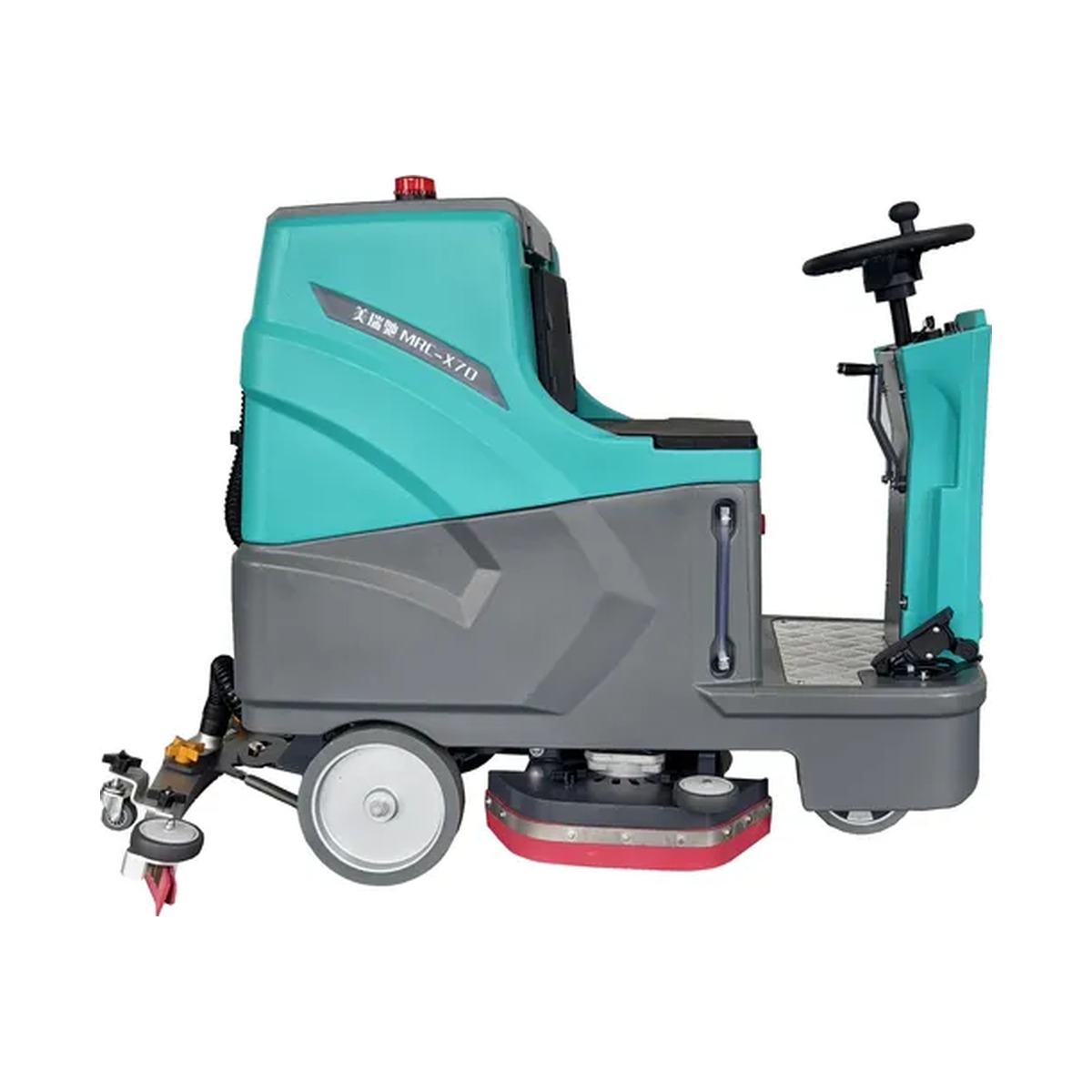
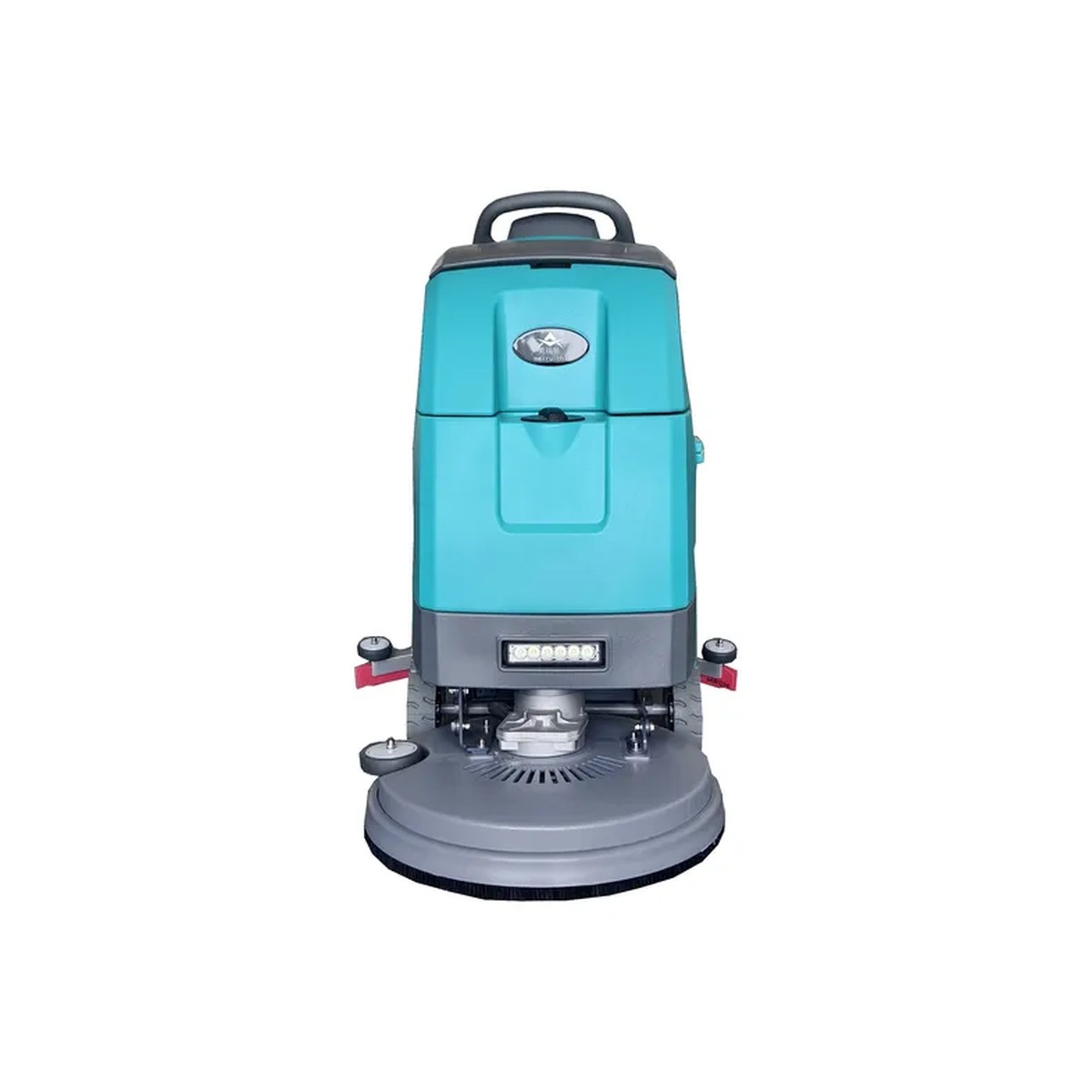
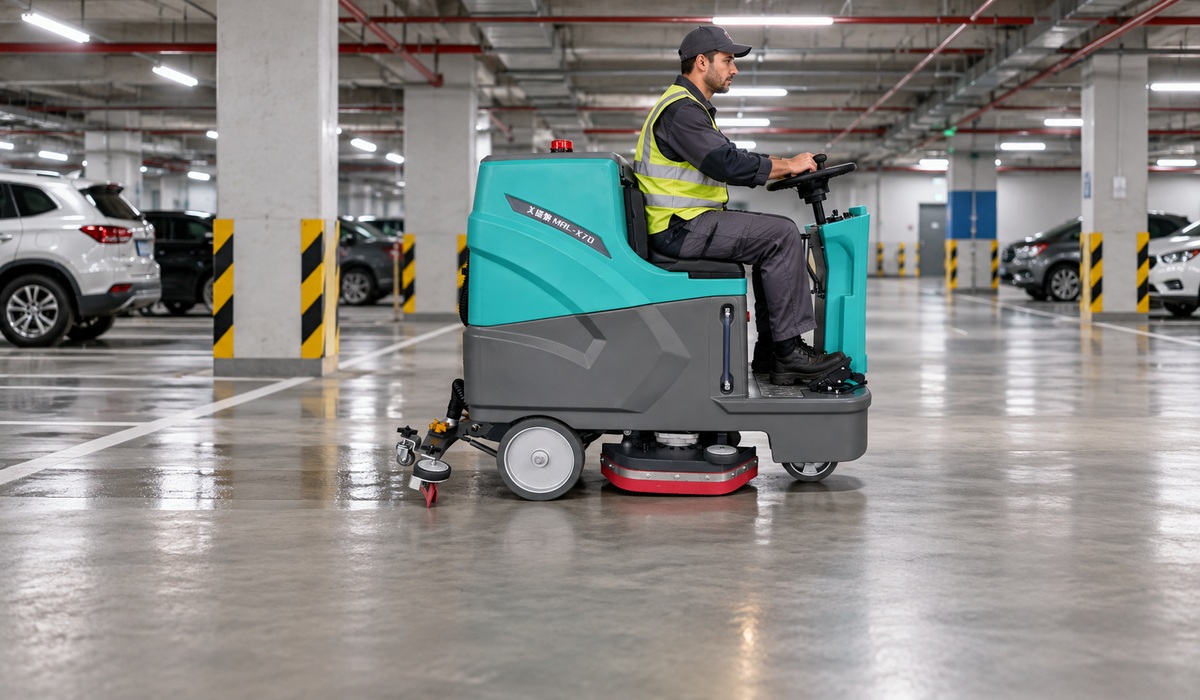
Compare ride-on and walk-behind formats after the route and surface questions are clear. Long open runs may make a ride-on format worth evaluating. Narrower or frequently interrupted routes may make a walk-behind format worth evaluating. Check actual model dimensions in either case.
Measure the narrowest doorway, full working clearance and space to turn at aisle ends. Include the squeegee or other attachments in the check. Follow the entire route from storage to cleaning and back again. Record gradients, thresholds and other restrictions for model-specific review instead of assuming every industrial machine can cross them.
Compare tank arrangements, power configuration, tool options and available documents alongside the route. Ask what is included in the quotation and what remains optional. For an MRCH shortlist, open the ride-on scrubber range and walk-behind scrubber range. Our format comparison guide explains the trade-offs in more detail.
6. Write the sequence for one normal cleaning shift
A repeatable sequence helps operators and warehouse staff coordinate. Start with the agreed route release, complete preparatory collection, carry out the planned cleaning passes, handle servicing stops and inspect the floor. Finish with machine care and a handover record.
- Confirm which zones are released for cleaning and who controls access.
- Complete the assigned collection of loose and oversized material.
- Check the machine and prepare its approved tool and solution configuration.
- Make a short test pass in the designated area and check cleaning and recovery.
- Follow the agreed zone sequence, recording interruptions or inaccessible areas.
- Refill and empty only at the planned locations using the relevant procedures.
- Inspect the completed route before handing it back to operations.
- Clean and store the machine, record defects and update the next shift.
When traffic prevents access, record the area left unfinished. Do not mark the entire warehouse complete because the machine has finished its available route. A clear exception record helps the supervisor reschedule the remaining work instead of letting missed zones become permanent gaps.
7. Budget the real cleaning window
Build the schedule from the time the warehouse makes available, then subtract the necessary supporting tasks. Machine specifications can inform a shortlist, but the completed route includes more than straight-line cleaning. Travel, turns, water handling and interruptions need explicit allowances.
Consider an illustrative warehouse with a 150-minute cleaning window. The planner allocates 15 minutes to preparatory collection and setup, 15 to travel and coordination, 20 to water handling, and 15 to final machine care. The remaining 85 minutes are available for the planned cleaning passes and inspection. These are example planning inputs, not a measured MRCH result or a standard schedule.
If the planned route needs more time, test the assumptions. Could the loading area be released earlier? Could the servicing location shorten travel? Is the route being interrupted by stock movement? Should some zones be cleaned at a different frequency? Increasing machine size does not necessarily address those questions.
Where practical, run a timed trial and record the floor, residue, tool, operator and machine configuration. Compare the observed result with the planned window. Use our cleaning-window guide to keep preparation and machine care visible in the comparison.
8. Define what a completed route looks like
Agree on inspection points before testing equipment. Choose representative locations such as an aisle end, an open travel lane and an area near a loading door. Include any difficult zone that is expected to be handled by the proposed process. Use the same points when reviewing subsequent shifts.
Record visible residue, missed strips, standing water and any apparent change to the floor finish. Assess the route under the site’s acceptance and reopening procedure. A glossy photograph alone cannot establish cleanliness, safety or compatibility with a coating.
Use a simple result sheet: zone, planned method, observed result, remaining task and person responsible. Photographs taken from consistent positions can help compare visible conditions. Avoid claiming percentage improvements unless there is a defined measurement method, a valid baseline and comparable test conditions.
If a test fails, describe the failure precisely. “Water remains at the aisle-end turn” is more useful than “machine does not work.” A precise observation can lead to a review of the route, recovery setup or surface rather than an unnecessary change of equipment category.
9. Set cleaning frequency by zone
Do not give every part of the warehouse the same frequency merely to simplify the spreadsheet. Record when soil enters each zone and when it interferes with the site’s required condition. Review loading areas, main traffic lanes and less-used storage areas separately.
Start with a schedule agreed by the warehouse team, then adjust it using observations. A change in stock, weather exposure or vehicle movement may change the workload. Record why the schedule changed so that future staff understand the reason instead of inheriting an unexplained routine.
Keep routine maintenance cleaning separate from occasional intensive work and immediate spill response. Each has a different trigger and may require a different method. Combining all three into a single promise of “daily machine cleaning” makes staffing and equipment estimates difficult to interpret.
Mistakes that make warehouse cleaning harder
- Using gross building area as cleanable area. Measure the accessible route and distinguish occupied storage space.
- Ignoring the route to the servicing point. Include travel, water handling and storage access in the comparison.
- Specifying a machine before identifying residue. Separate collection, spot treatment and wet scrubbing tasks.
- Comparing incomplete quotations. Ask each supplier to list the exact battery, charger, working tool and accessories.
- Leaving edges and blocked areas unassigned. State who handles work outside the machine’s route.
- Skipping after-use care. Reserve time for the machine to be ready for the next shift.
What to send MRCH for a warehouse equipment enquiry
Send the zone plan, accessible area, floor description, residue photographs and cleaning window. Mark the narrowest access and turning space. Add water, emptying, charging and storage locations. State the intended quantity, delivery country and any documentation or branding requirements.
Ask for an itemized model proposal that states its assumptions. Confirm which tasks the proposed machine covers and which require another method. Review the current product specifications and request clarification where a dimension, tool or power arrangement is unclear.
You can use the site-survey checklist to organize these details, then send your warehouse brief to MRCH. A specific brief makes it easier to compare configurations and identify questions that still need a site trial.
Warehouse floor-cleaning questions
Should I sweep before using a scrubber dryer?
Identify and remove material that the planned scrubbing process is not designed to handle. The appropriate preparation depends on the debris and the exact machine configuration. Do not assume a scrubber includes a separate sweeping function.
Can one machine handle every warehouse area?
Check access and the required cleaning method zone by zone. A main-route machine may still need support for corners, restricted workstations or separate collection tasks. Account for that work in the plan.
How do I maintain the machine after warehouse cleaning?
Follow its supplied manual for emptying, accessible cleaning, tool checks, charging and storage. Use the floor scrubber maintenance checklist to organize operator records and handover responsibilities.
Turn the warehouse plan into an MRCH shortlist
Compare the MRCH X70 ride-on floor scrubber for the assessed open wet-cleaning route and the MRCH X50 walk-behind floor scrubber for an operator-guided alternative. Map actual access, floor compatibility and servicing stops before deciding. Product format is a starting point; it does not establish that a model fits every warehouse aisle.
For suitable loose-debris collection before wet cleaning, review the MRCH M10 walk-behind floor sweeper. If collection is needed at individual work points, describe the material and available electrical supply in an EAC36XC industrial vacuum enquiry. Keep the collection configuration and any specialist-material requirements separate from the scrubber proposal.