
Choose an industrial vacuum by the collection task
To choose an industrial vacuum cleaner, describe what must be collected, where it is collected and how the machine will be powered. Then compare the complete configuration: collection container, hose, tools, filtration and operating arrangement. Motor wattage alone cannot answer whether a vacuum suits a particular factory task.
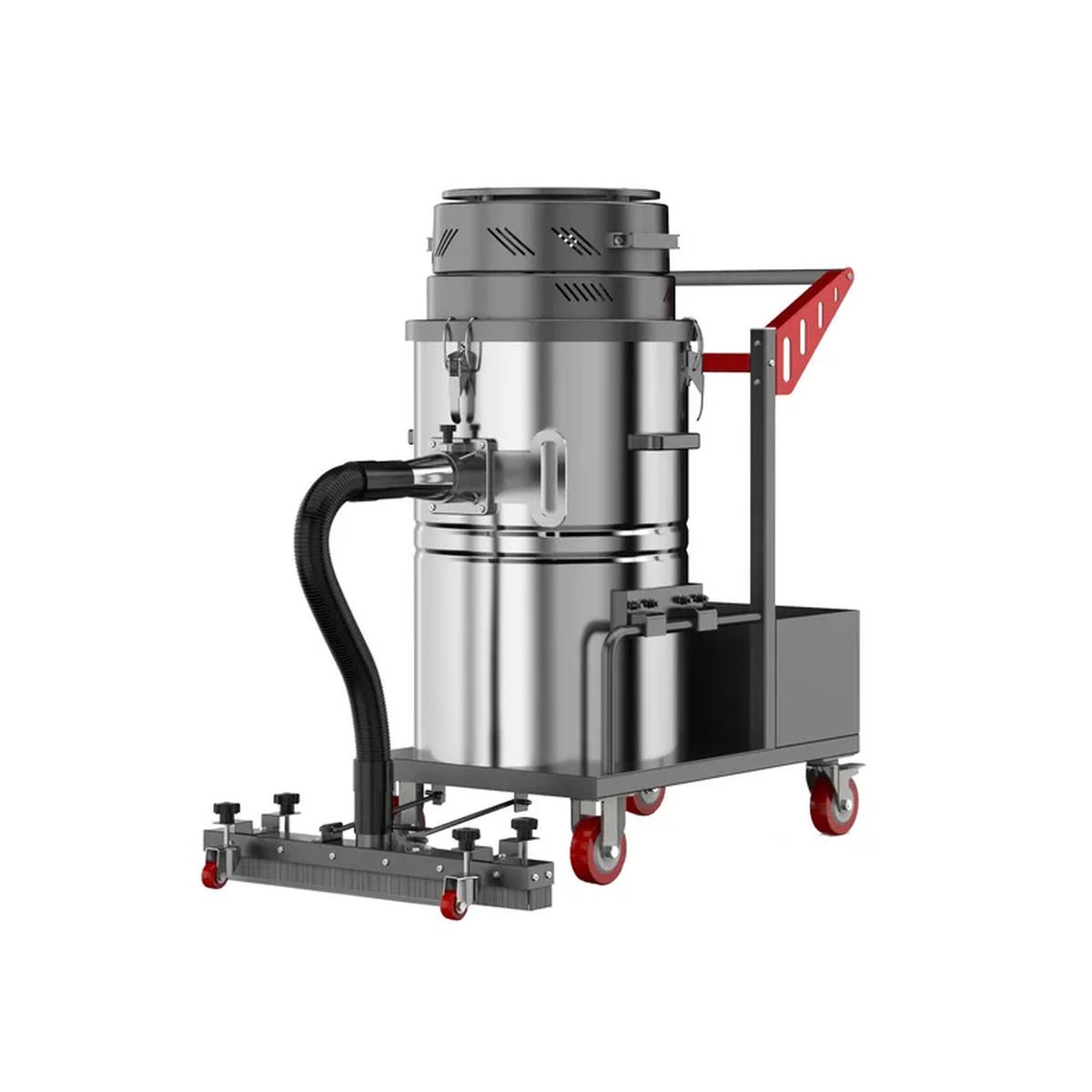
The MRCH range includes the EAC36XC industrial vacuum cleaner and SAC22XS industrial vacuum cleaner. Their published electrical ratings differ, making them useful examples of why a buyer should compare individual listings rather than treat all trolley vacuums as equivalent. This guide connects those products to the questions a facilities team or distributor should resolve before requesting a quotation.
Write a material description that can be assessed
“Factory dust” is too broad to specify equipment. Describe the process that produces the material, its physical form, approximate quantity and whether it is dry, damp, sticky, sharp or mixed with liquid. Include photographs and the relevant material information available at your site. Say whether you need occasional housekeeping or collection directly from a production process.
Separate ordinary housekeeping from material that requires a specialist assessment. Combustible, toxic or otherwise hazardous material cannot be approved for a vacuum merely from its container size or appearance. Request written suitability and the applicable documentation for the exact material and machine configuration. Do not treat the model examples in this article as a recommendation for hazardous dust.
Also explain how the material will be emptied. An accessible collection point can still create a difficult task if the full container cannot be moved or discharged conveniently. Include the approved disposal or collection arrangement in the equipment discussion, especially where different waste streams must remain separate.
Compare two published MRCH configurations
| Published specification | MRCH EAC36XC | MRCH SAC22XS | Buyer action |
|---|---|---|---|
| Listed voltage | AC220V | AC380V | Confirm destination voltage, frequency, phase, connection and approved supply. |
| Listed motor power | 3600W | 2200W | Review electrical requirements separately from collection performance. |
| Listed dust bucket capacity | 80L | 80L | Check usable collection limits, material characteristics and emptying arrangements. |
| Product format | Industrial vacuum cleaner | Industrial vacuum cleaner | Confirm the hose, tools, filter and permitted duty supplied with the quotation. |
These values are taken from the linked MRCH product listings. They identify configurations to discuss, not a promise that a particular machine fits every 220V or 380V workplace. Ask for the final specification for your destination and order. A higher input-power number should not be read as proof of better pickup, longer duty or more suitable filtration.
The shared 80L container description also does not make the machines interchangeable. The electrical supply and other fitted components matter. Start with the model that can be evaluated against your available supply and collection task, then resolve the remaining requirements in the quotation.
Check power where the work actually happens
Map the collection points and identify the available electrical supply at each one. A suitable outlet in the maintenance room is not useful evidence if the machine must operate across several production bays. Record the route, connection locations and any restrictions on cables in working areas.
For an EAC36XC enquiry, state that you are reviewing the listing marked AC220V and provide your site’s actual supply details. For a SAC22XS enquiry, do the same for the AC380V listing. Ask the supplier and your responsible electrical personnel to confirm the complete arrangement. Do not assume a plug adapter changes the electrical suitability of a machine.
If the machine will move between buildings or be resold into more than one market, list those destinations separately. One configuration should not silently become the standard for every location. Keep the confirmed electrical specification with the purchase record and identification details.
Decide between a mobile machine and an engineered system
A trolley vacuum can be evaluated for collection points that change or are visited one at a time. A requirement for several simultaneous pickup points or integration with production machinery is a different project. It needs a system review covering the collection process, connections, capacity and controls rather than an assumption that a mobile machine can be connected anywhere.
Delfin’s comparison of central and mobile vacuum arrangements explains this distinction and discusses the separate elements of a central system. For an MRCH enquiry, describe which arrangement you need. The EAC36XC and SAC22XS links above are individual product listings; they do not establish that MRCH is supplying a designed central extraction installation.
Where production extraction already exists, clarify what the new equipment should add. It might be intended for housekeeping around the line rather than replacing the existing extraction. Keeping those scopes separate produces a clearer purchase brief and avoids expecting one piece of equipment to perform two different jobs.
Review the hose and tool at the pickup point
Describe the reach needed around the workstation, the surface being cleaned and the space available for the operator. Photograph narrow access areas and the intended pickup position. Ask which hose and tool are included and whether the complete arrangement has been assessed for the material.
A long reach requirement should be discussed before ordering. Do not add an arbitrary hose extension and assume that the original performance description still applies. The supplier needs to understand the complete pickup arrangement, not just the vacuum standing beside a wall.
Ask how the accessories will be stored and identified. If several machines or materials are involved, a clearly labeled set helps prevent unsuitable tools being exchanged between tasks. Include replacement availability and confirmed accessory references in the purchasing record.
Ask specific filtration questions
Request the filter identification, permitted material, cleaning method and replacement information for the proposed configuration. If a product listing states a filtration figure, ask what it represents and which supporting documentation applies. A particle-size figure on its own is not proof of a complete-machine dust classification, hazardous-material approval or a particular certified filtration claim.
Explain the expected workload and how often collection stops are practical. Ask how operators recognize the need for permitted filter care and what work requires service personnel. The answer should be tied to the machine instructions, not a generic interval copied from another manufacturer’s equipment.
Keep the quotation precise about liquid pickup. A metal container or industrial appearance does not establish wet-use suitability. If liquid collection is part of the job, state the liquid and conditions and obtain confirmation for the exact configuration before including that task in the operating plan.
Compare a vacuum with the other MRCH equipment families
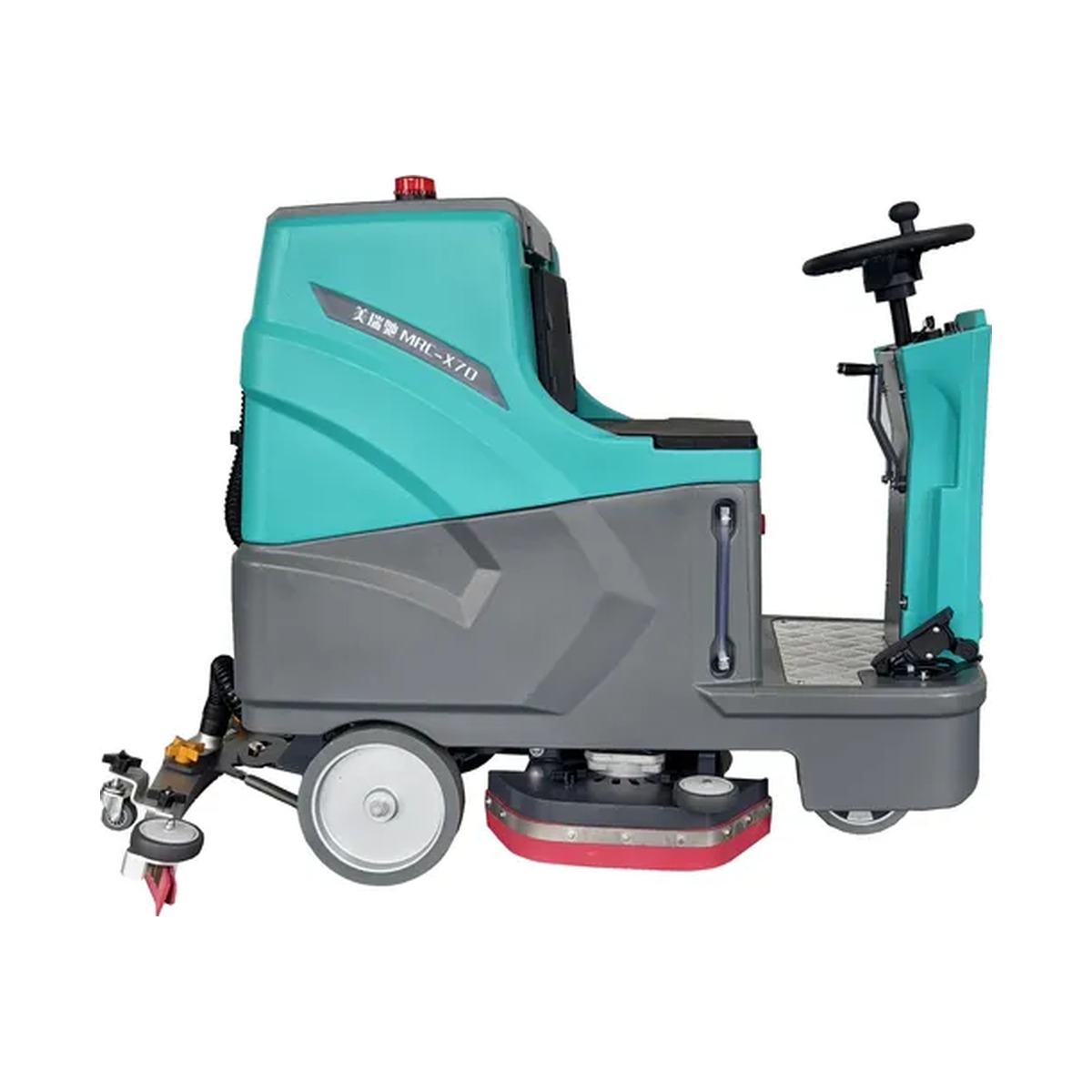
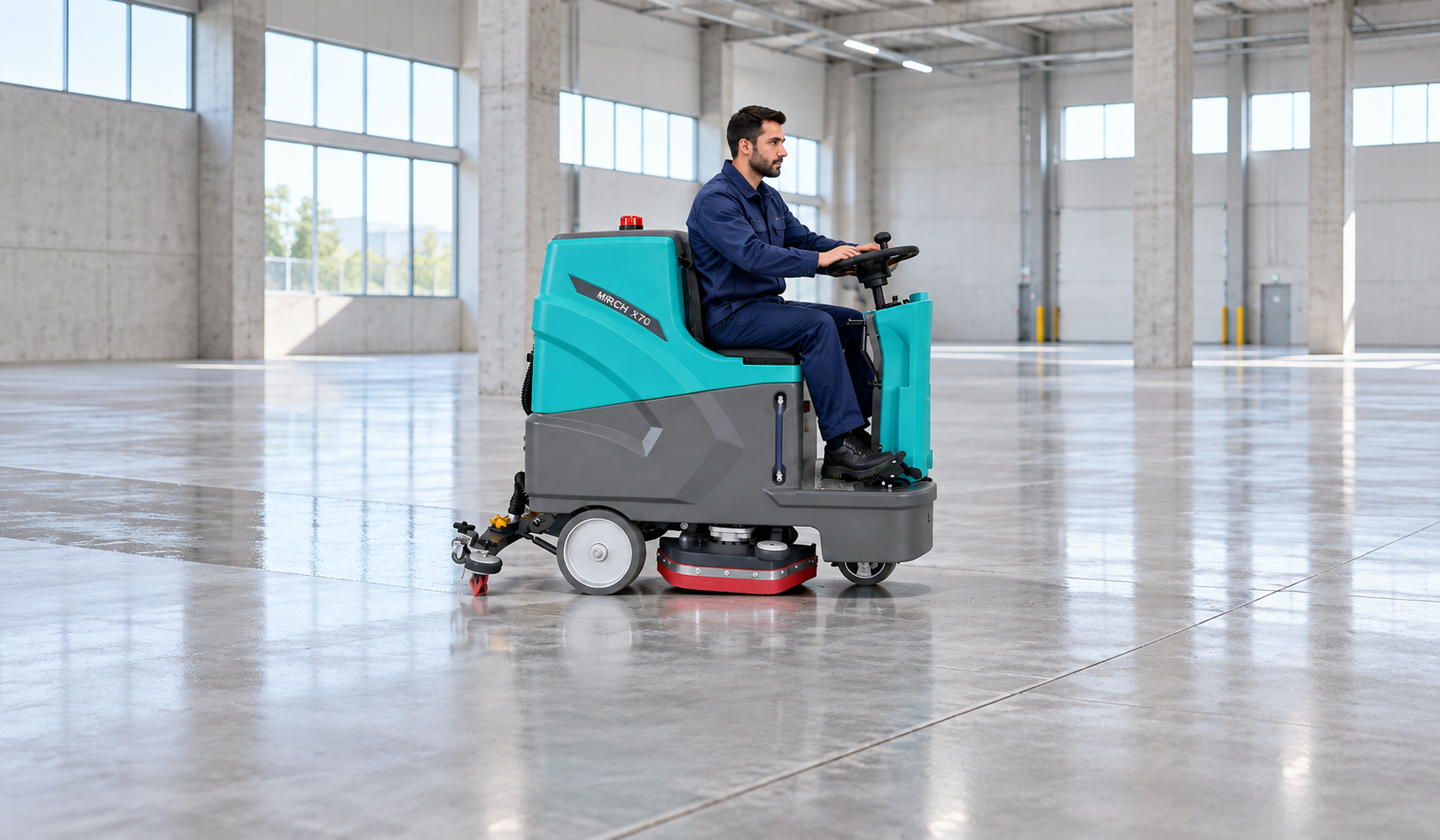
If the main job is collecting loose debris across an accessible floor route, compare the MRCH M10 walk-behind floor sweeper as a separate route-cleaning option. If the job is wet scrubbing and water recovery on a compatible floor, review the MRCH X50 or MRCH X70. Point collection, sweeping and wet scrubbing answer different questions.
A factory may need more than one method. Describe the work by zone and material before combining it into a fleet proposal. This makes it easier to assign a suitable machine to each task and to identify work that requires specialist equipment outside the proposed package.
Send a complete industrial-vacuum enquiry
Include your preferred model, material description, estimated collection volume, working locations, required reach, supply details, operating schedule and emptying arrangement. Add the destination country, quantity and any documentation requirement. Ask for an itemized configuration covering the vacuum, hose, tools and filtration.
Use the linked EAC36XC and SAC22XS pages as starting points, then send MRCH your collection requirements. A useful quotation should identify what is included, what task has been reviewed and which questions remain open. Keep that confirmed configuration with the machine record for future care and replacement enquiries.