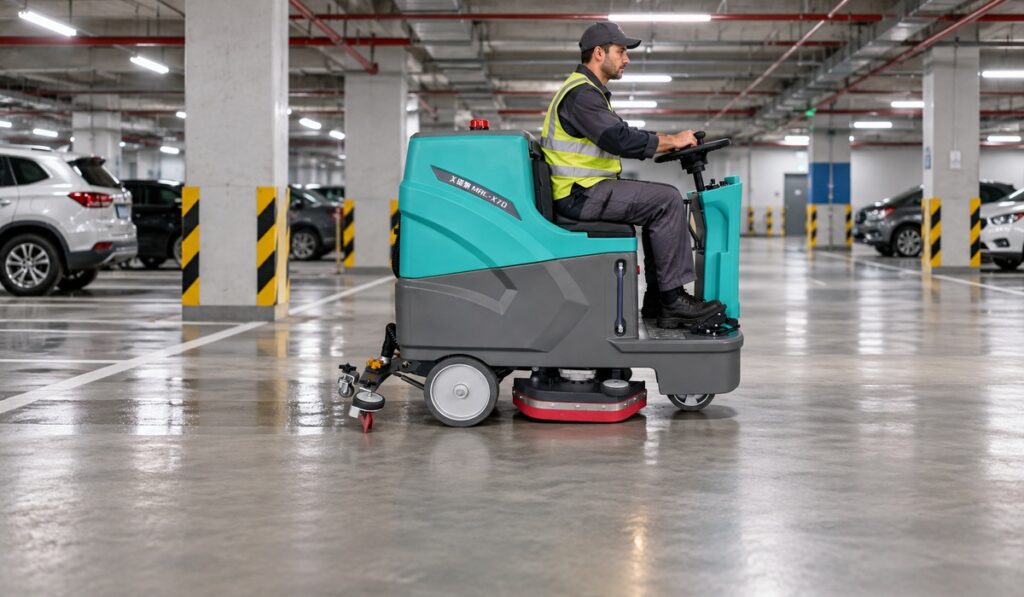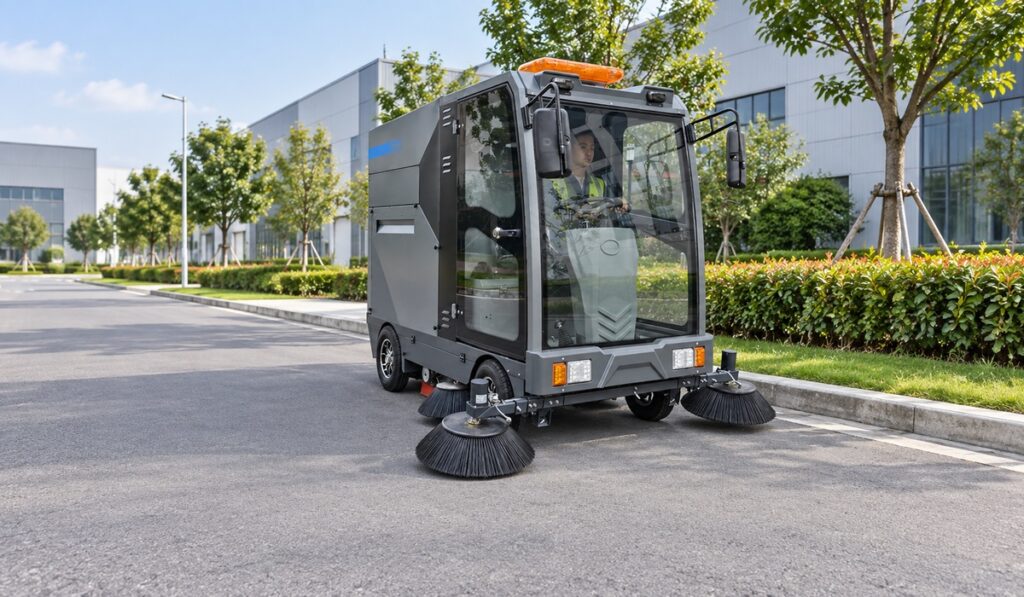

Floor Finish
Identify coatings, sealants and surface condition before selecting brushes, pads or cleaning chemistry.
Discuss this priority →
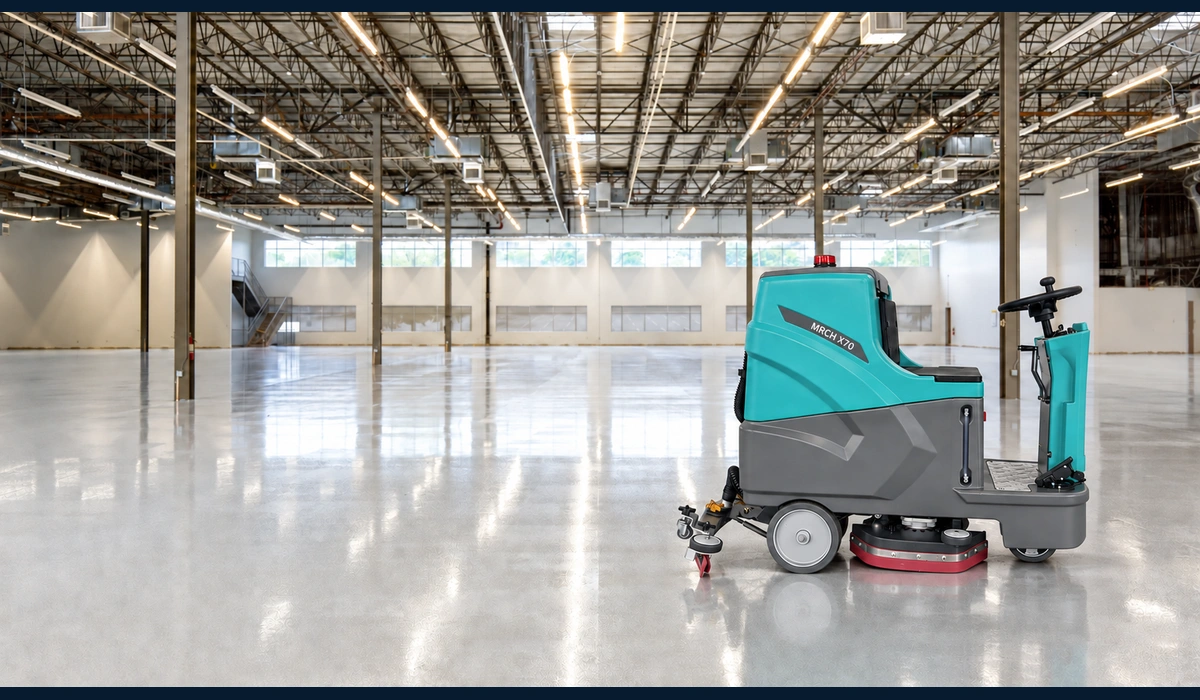
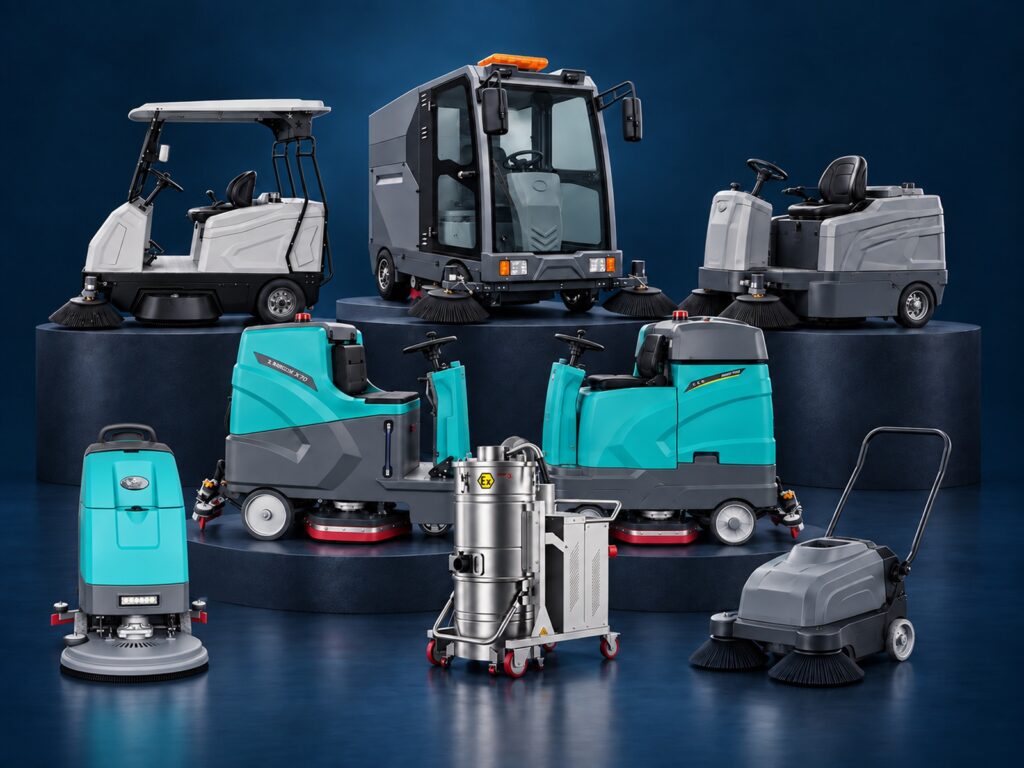
Concrete is a broad description, not a complete cleaning specification. Record whether the surface is polished, sealed, coated or untreated, and identify worn sections, damaged joints and areas with different finishes.
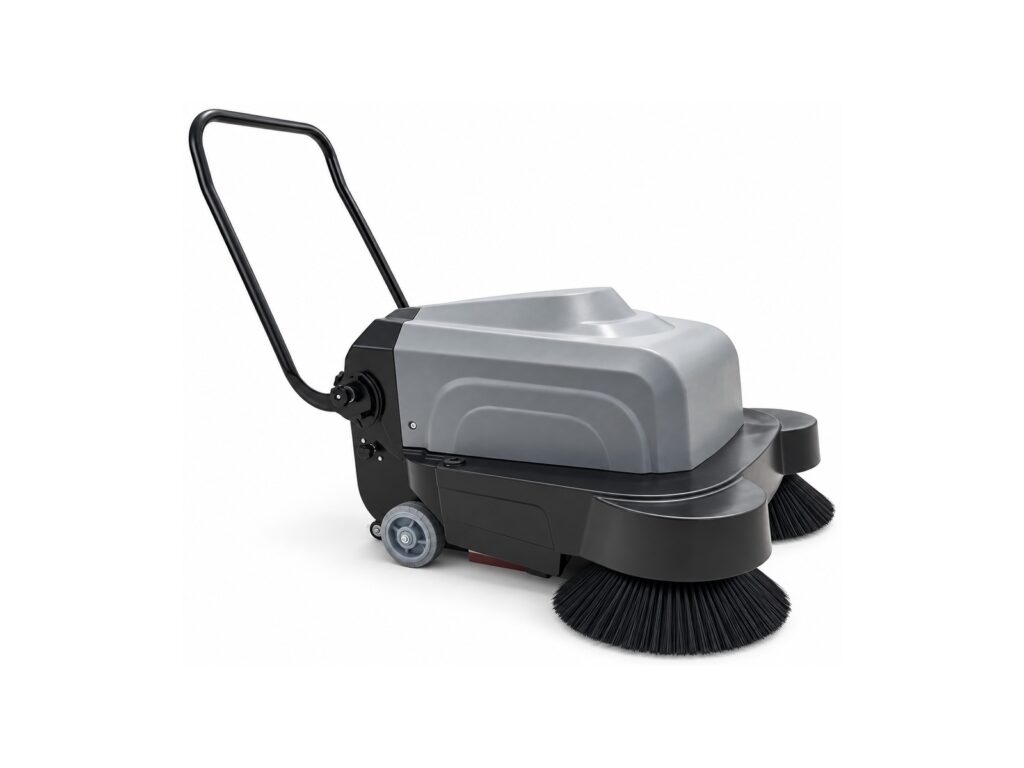
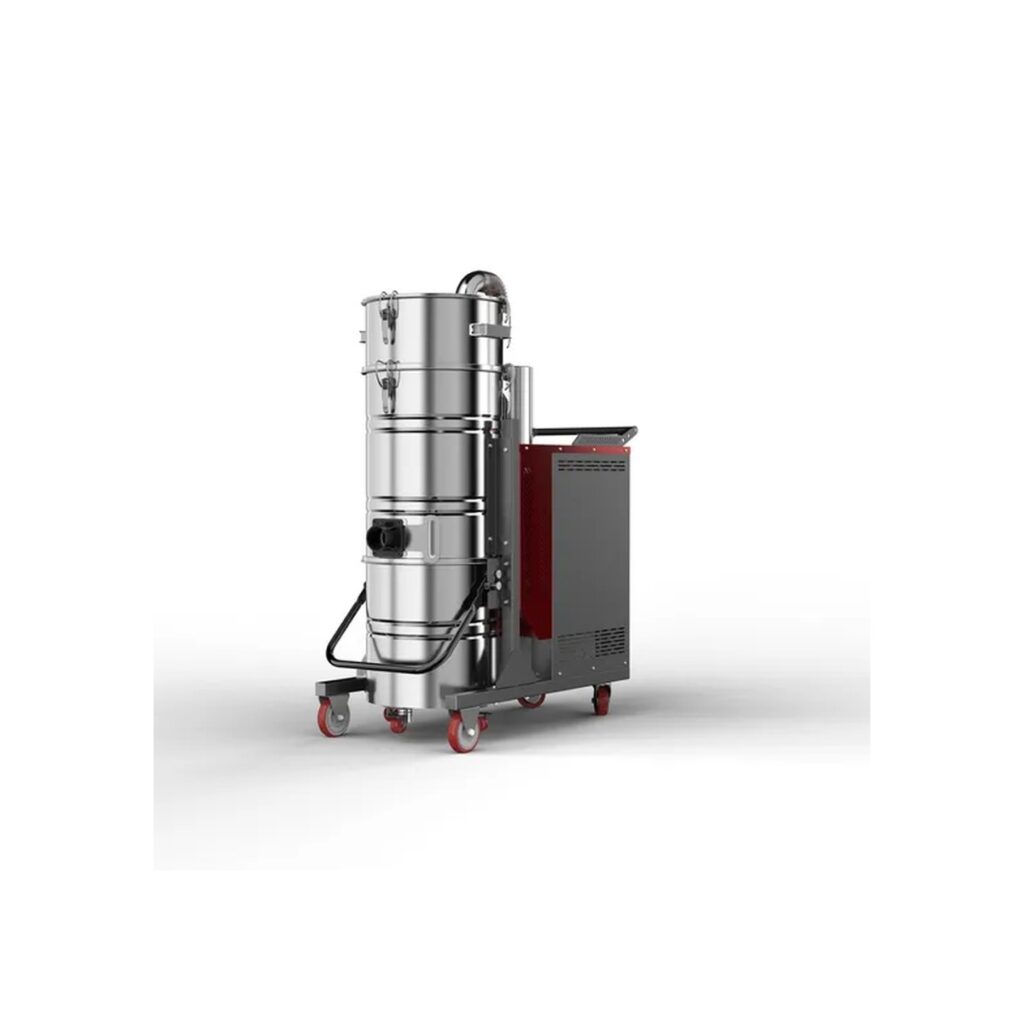
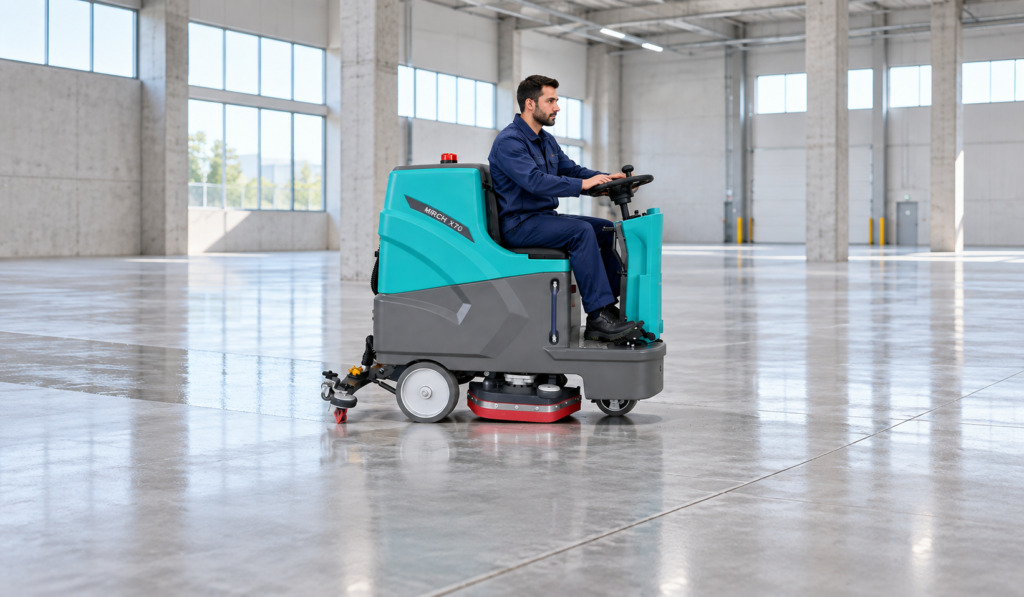
Separate loose material from adhered residue. Sweeping or appropriate vacuum pickup can address collection tasks, while a compatible scrubber-dryer process may be considered for wet maintenance. Select tools and chemistry for the actual finish.
A small, appropriate trial helps assess cleaning, recovery and the effect on the surface. Treat repairs, coating removal and construction-residue work as separate requirements rather than promising them from a routine floor-cleaning machine.
Identify coatings, sealants and surface condition before selecting brushes, pads or cleaning chemistry.
Discuss this priority →Describe the debris and collection requirement. Compare sweeping and vacuum options against the material and access conditions.
Discuss this priority →Document the type of residue and the desired finish. Confirm a compatible process and trial it on a suitable test area.
Discuss this priority →Clarify whether the goal is routine care, stain treatment or a separate restoration task. The enquiry should identify the desired process before a machine is shortlisted.
Discuss this priority →
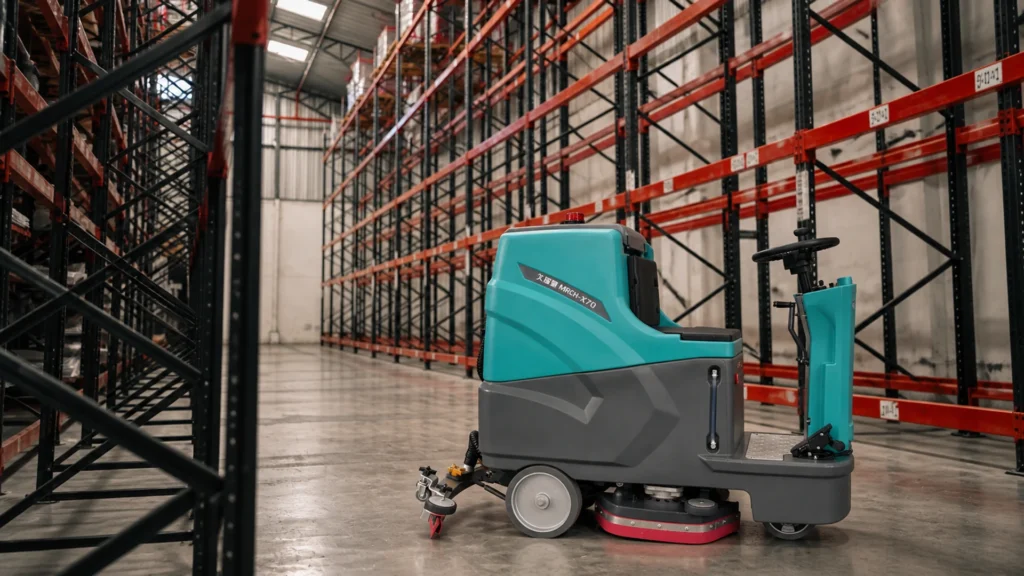
Plan cleaner warehouse aisles, loading zones and dispatch floors. Compare MRCH scrubbers, sweepers and industrial vacuums around your floor finish, packaging debris, forklift routes and available cleaning time.
Discuss this application ↗
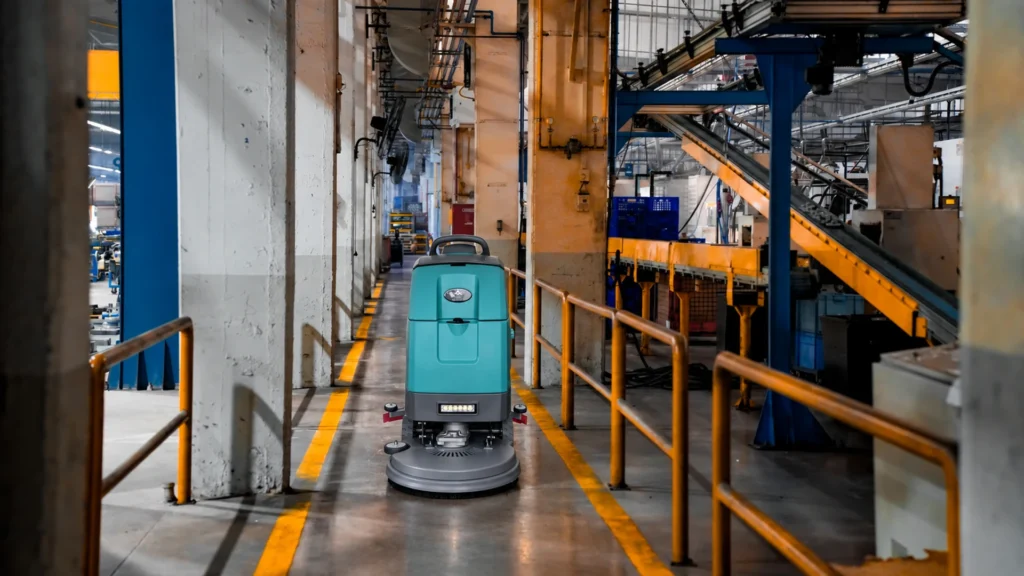
Match cleaning equipment to production aisles, workstations and workshop floors. Compare MRCH machines by the material to collect, floor compatibility, available access and the way your production shift operates.
Discuss this application ↗
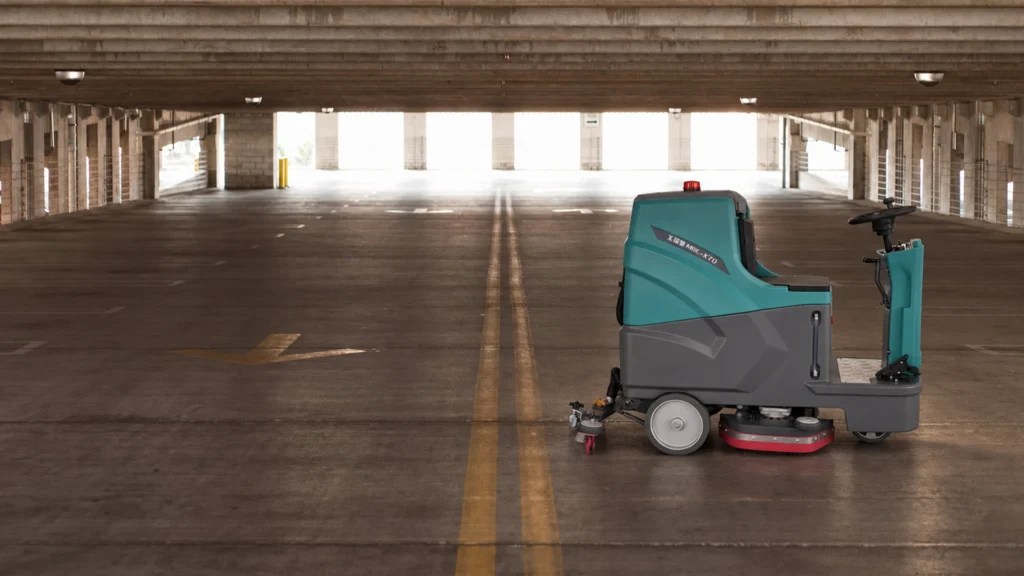
Plan covered garage floors and outdoor parking areas as distinct routes. Compare MRCH scrubbers and sweepers around clearances, ramps, turning space, floor finish and the debris your property collects.
Discuss this application ↗Record floor finish, damage, slopes and the type of residue.
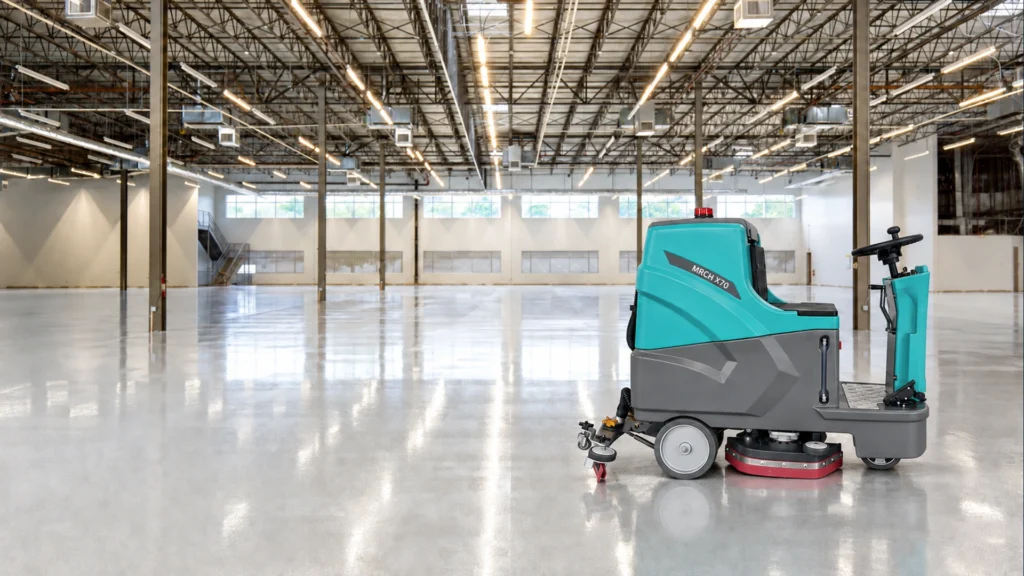
Choose a collection method appropriate to the actual material and the machine’s documented configuration.
Compare scrubbers and recovery capacity where wet cleaning is suitable for the floor.
Agree the exact model, included tools, consumables, quantity, required documents, packing and delivery destination.
Provide clear floor photos and information on sealers or coatings. Keep different finishes separate in the site brief.
Review the proposed brush or pad and compatible cleaning agent. Avoid selecting solely by aggressiveness or motor power.
Identify the material before comparing sweepers or vacuums. Fine construction dust requires a separately confirmed collection configuration.
Assess the surface after a suitable test, including joints and low spots. Record the tool, process and conditions so the result can be reviewed.

Compare the cleanin…
View article →

The machine is only part of the process. Surface finish, tool, chemistry and recovery requirements differ, so each floor needs its own configuration check and appropriate trial.
Routine floor scrubbing is different from mechanical polishing or restoration. State the task clearly and do not assume a scrubber will provide a polishing or resurfacing process.
Assess and collect suitable loose material first where required by the planned process. Describe the material and use a collection system confirmed for it, rather than assuming any sweeper or vacuum is suitable.
No blanket result can be promised. The stain, finish, previous treatment and cleaning process all matter. Send photos and describe the residue before discussing a suitable trial.
The exact material and required collection configuration must be identified first. Do not infer a fine-dust or hazardous-material rating from an industrial label or a model’s power figure.
Provide the finish and coating information, close-up floor photos, residue description, accessible area, joints or uneven sections, cleaning window and water-recovery arrangements.
Share what you need and the right person from the team will respond with practical information.