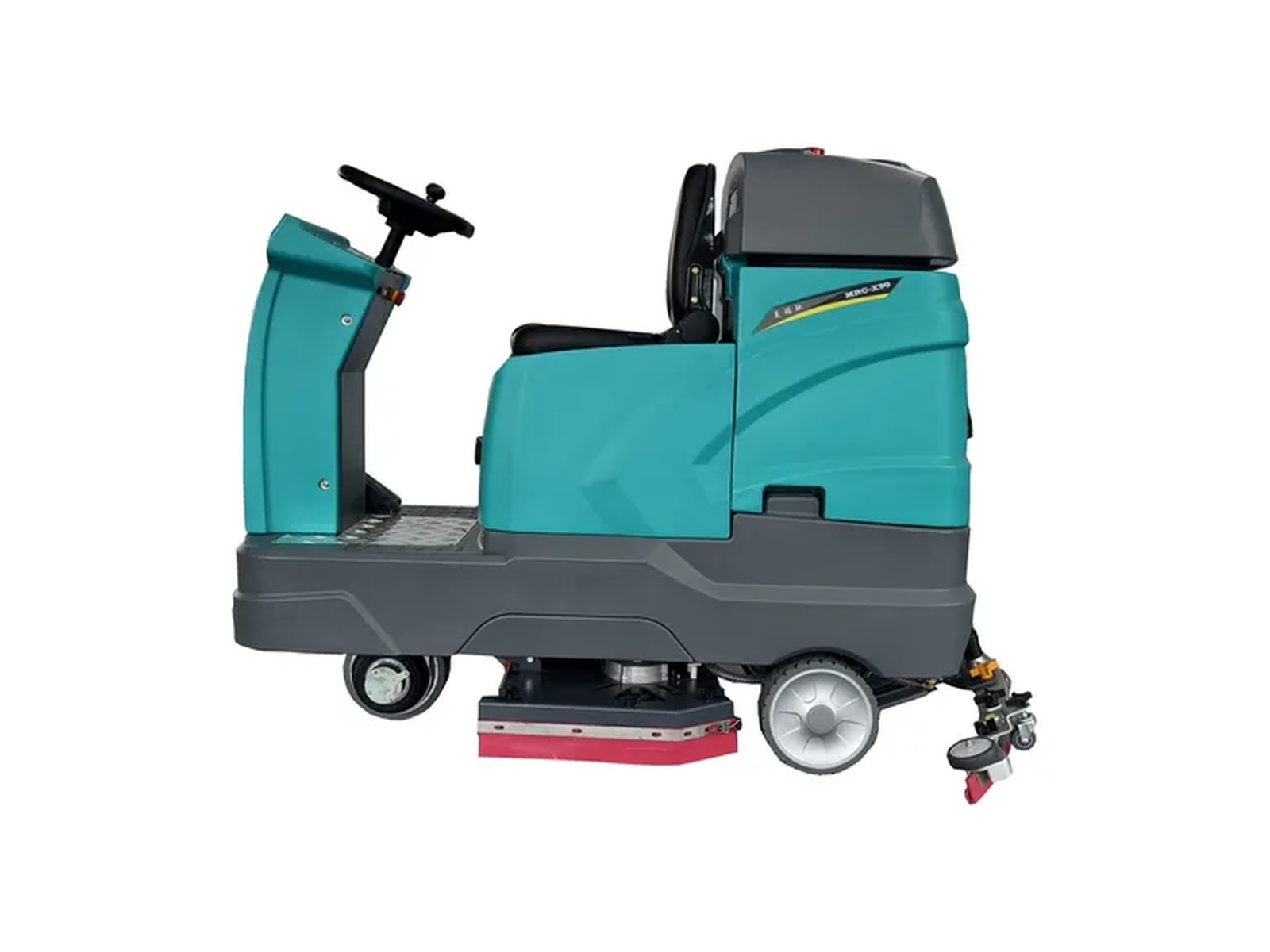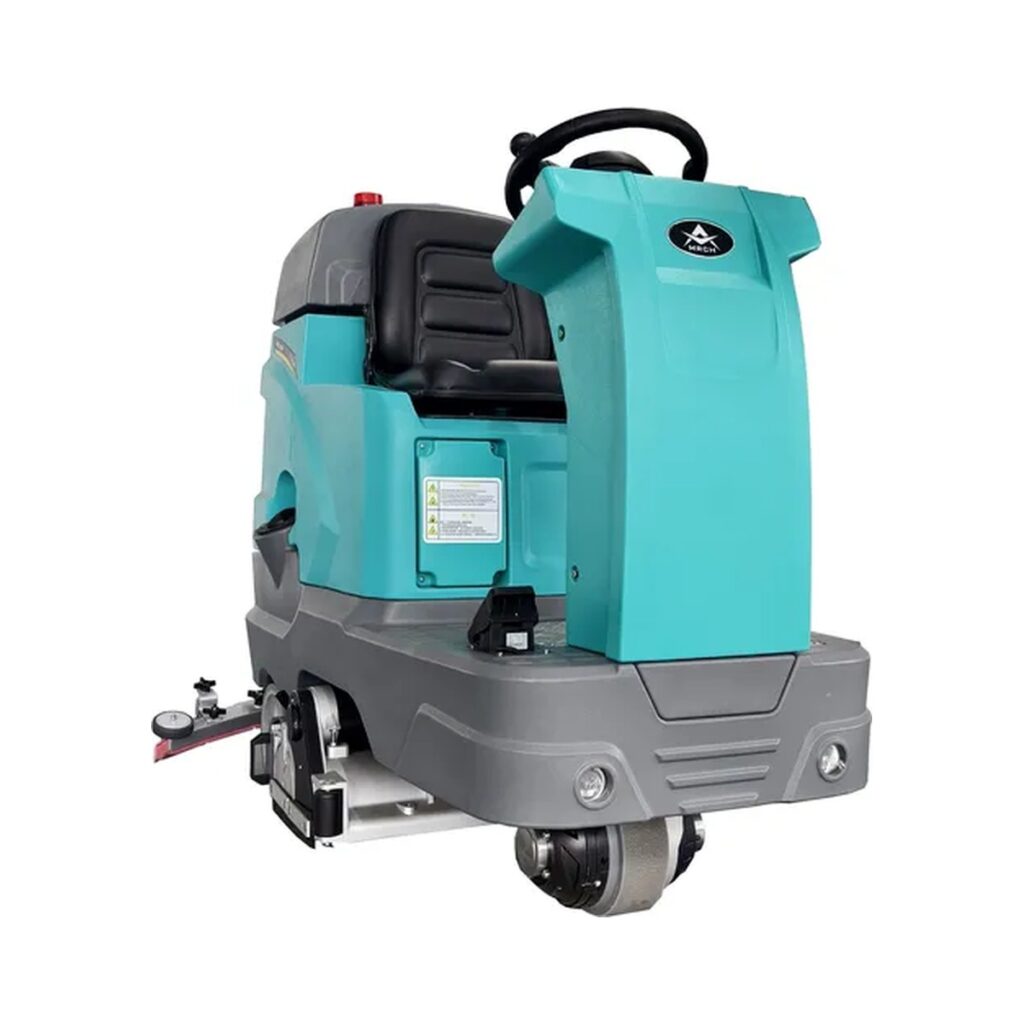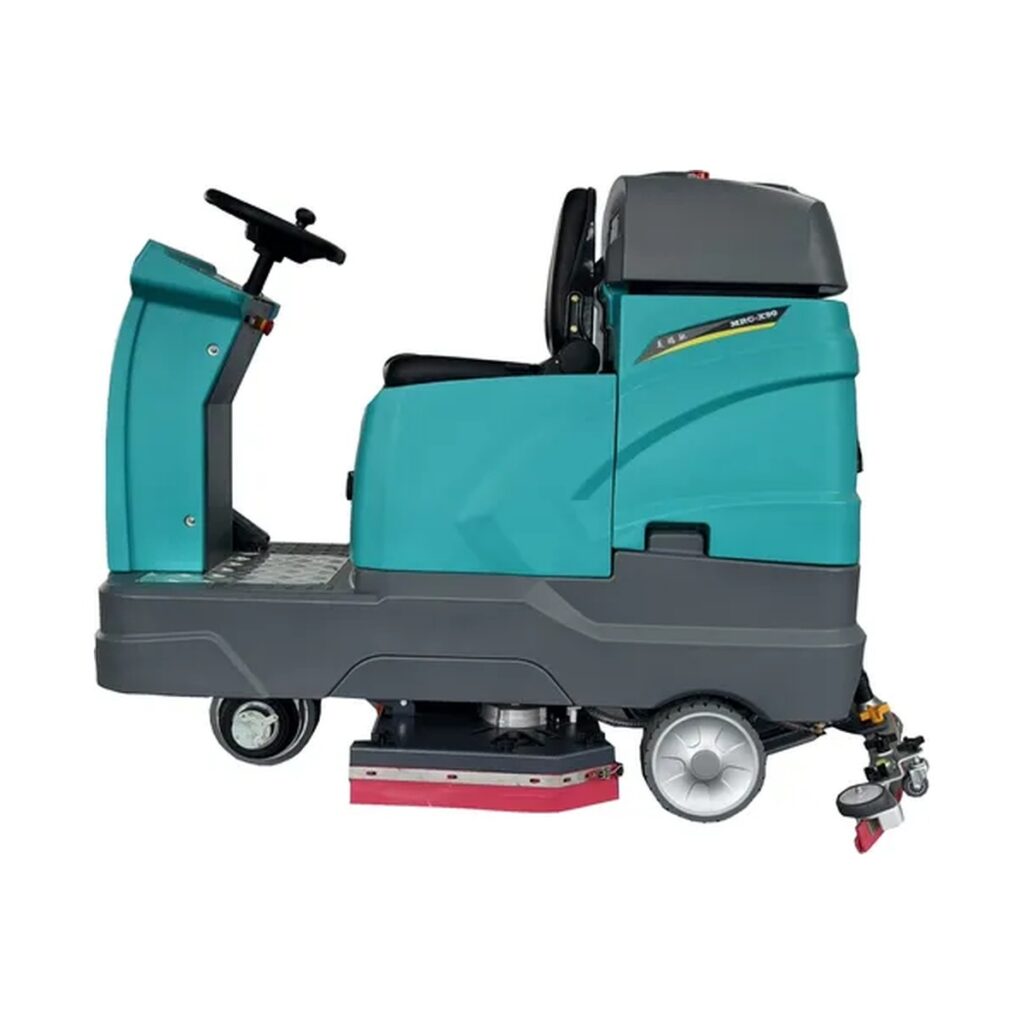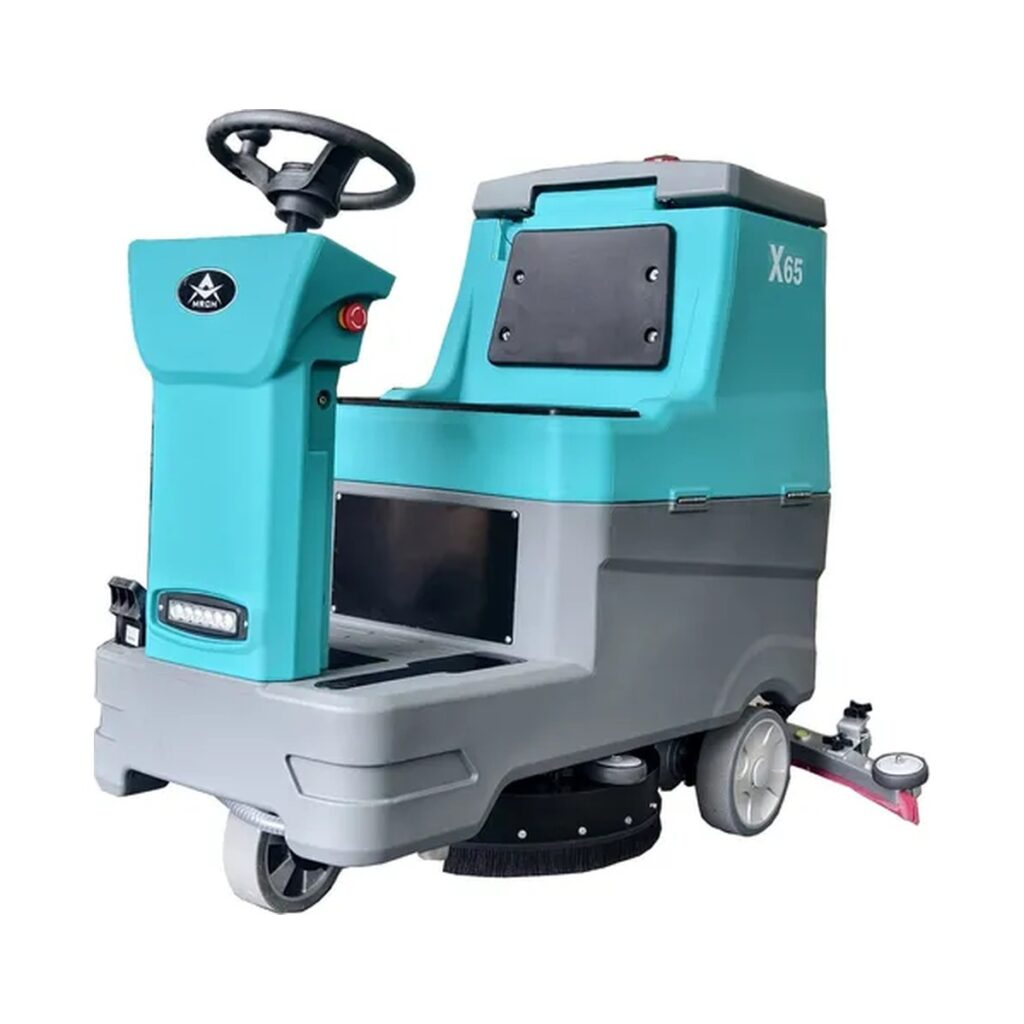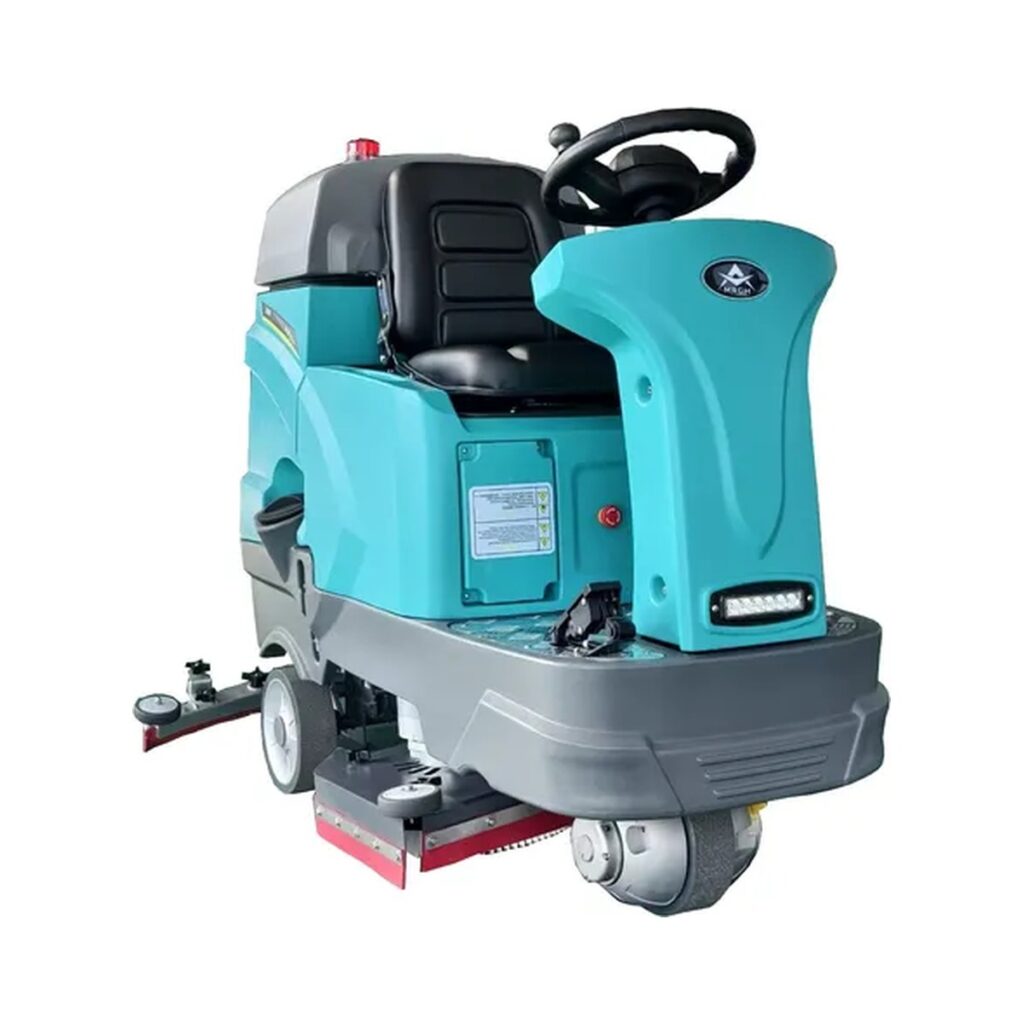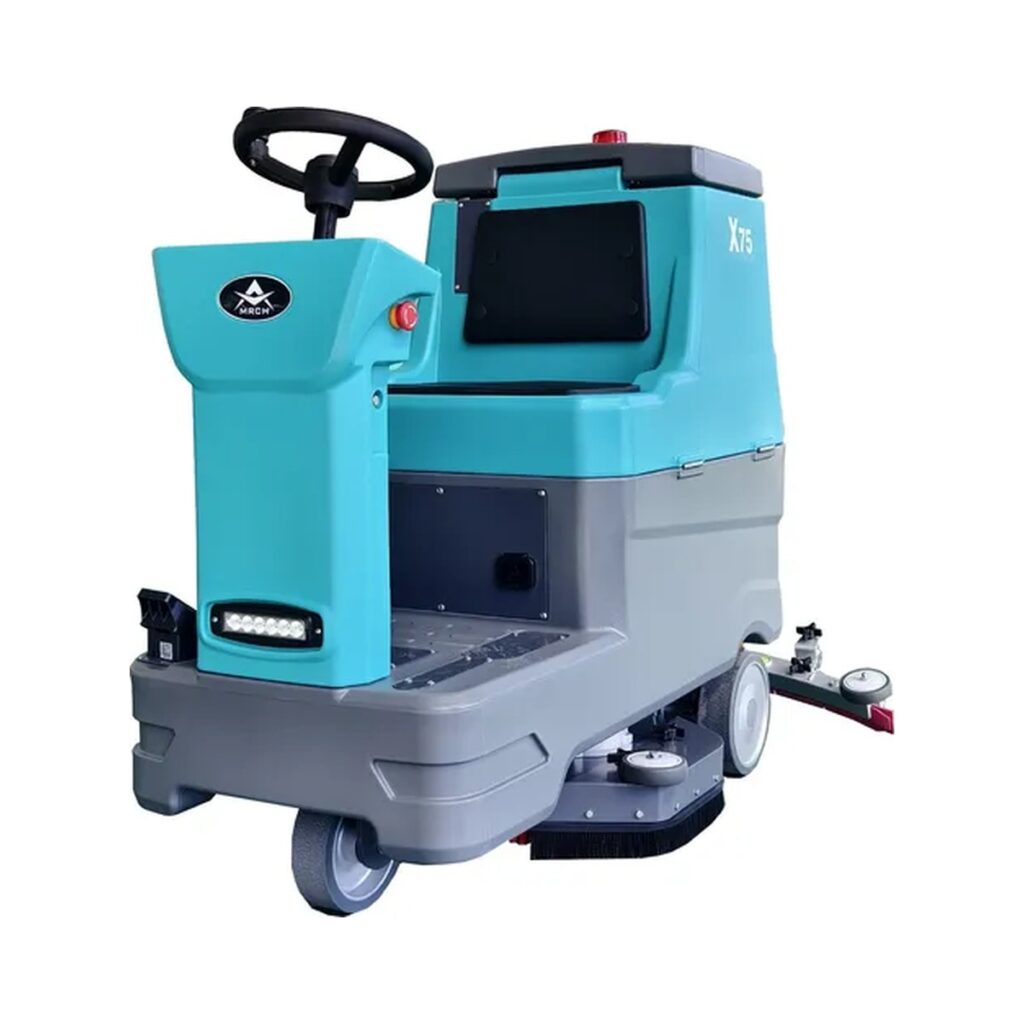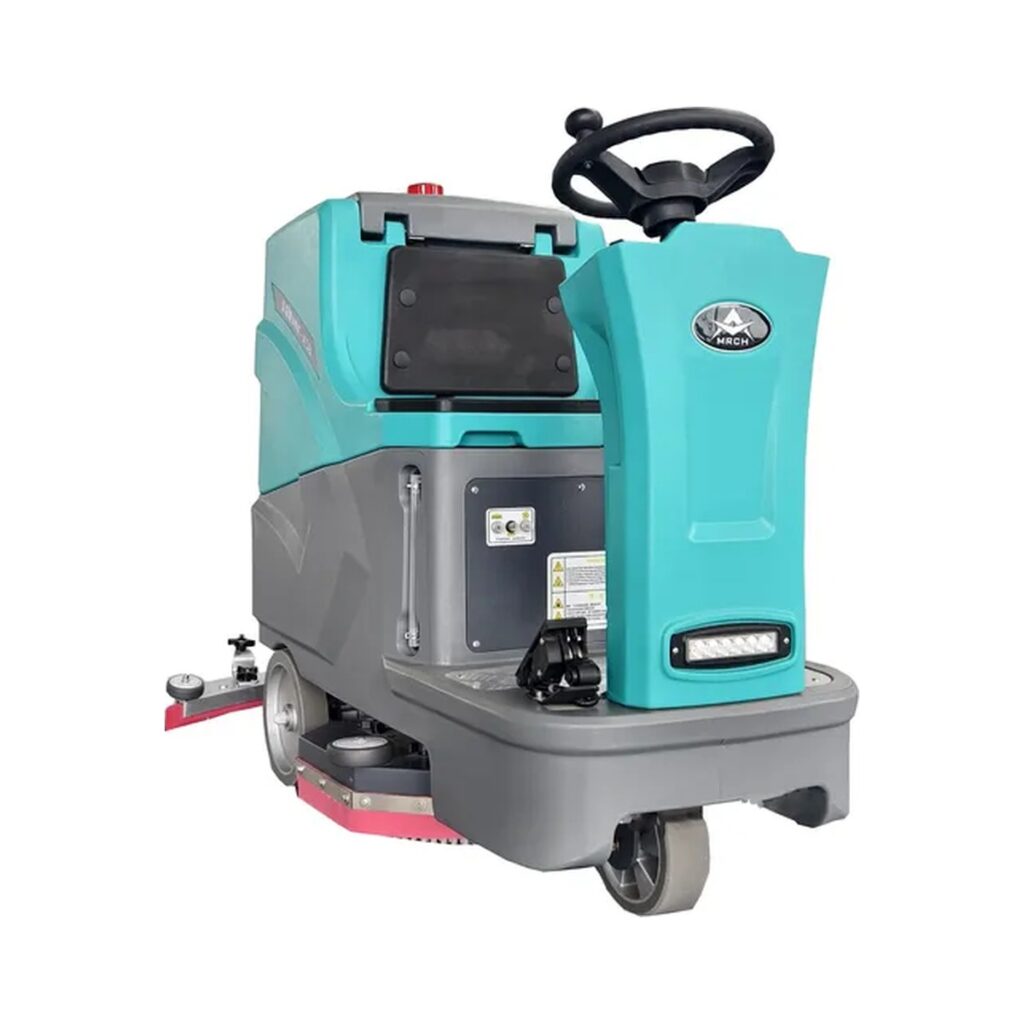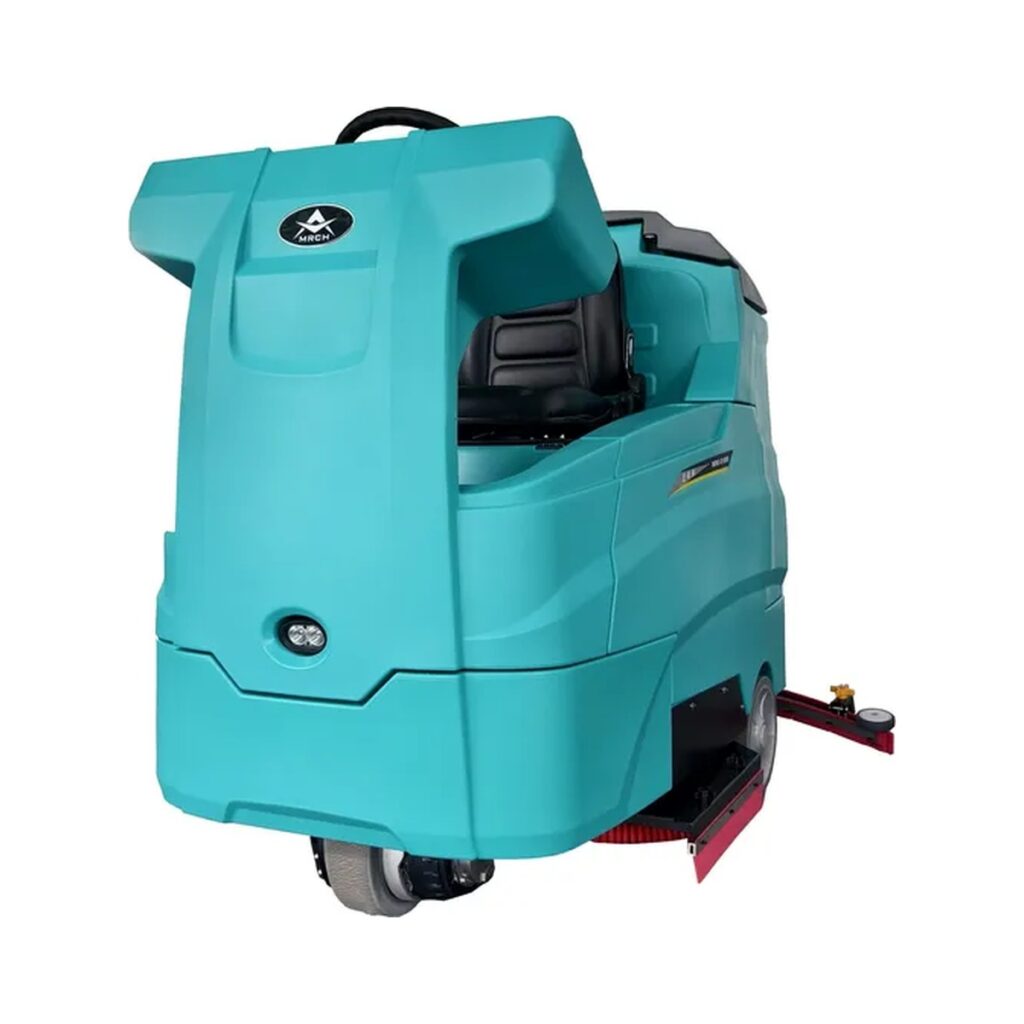

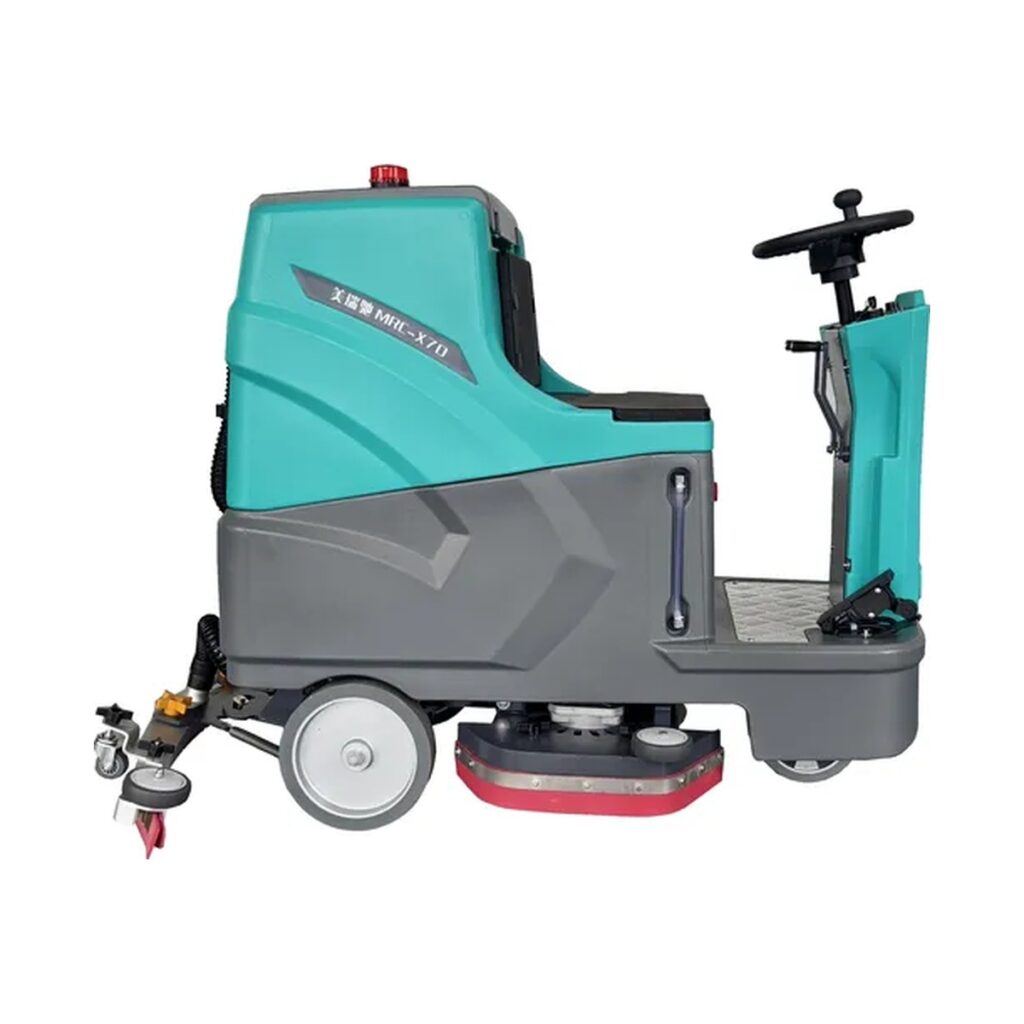
Compare 9 MRCH ride-on floor scrubber model families for warehouses, factories, parking garages and spacious commercial floors. Shortlist by water-tank capacity and listed battery runtime, then confirm access dimensions and the configuration for your cleaning route.
Compare one representative listing per model family. Filter by solution-tank capacity, listed runtime or model name. Each card shows the separate clean-water and recovery-tank capacities.
Filter the representative models displayed below. Values are listed specifications; confirm the final configuration before ordering. Runtime ranges use the lower listed value and are not a site-specific guarantee.
No matching models. Clear a filter or reset to view the range.
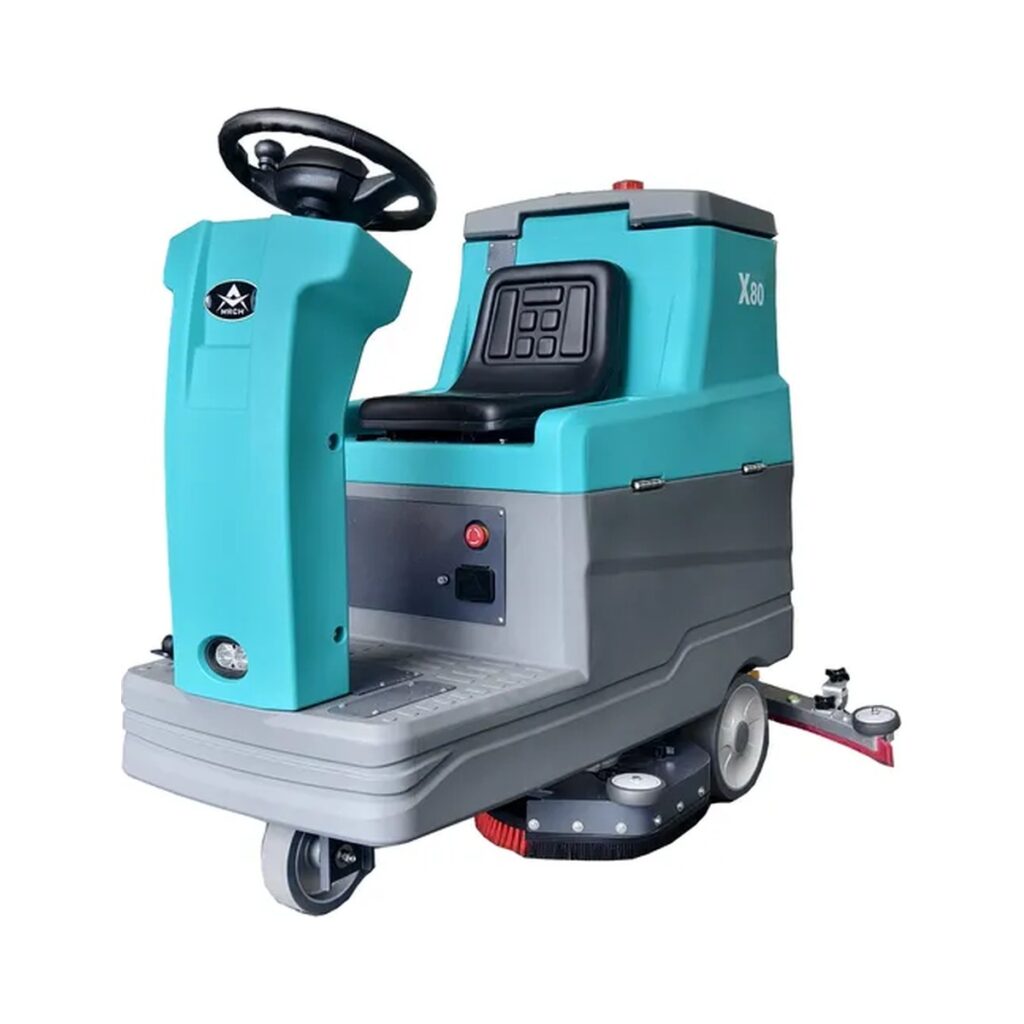
A ride-on scrubber can be a useful choice when the cleaning route involves long travel distances and broad accessible areas. Check the complete route rather than selecting by floor area alone: doors, turns, storage, filling and charging points all affect the machine that will work at your site.
Measure the narrowest doors and aisles and record obstacles at corners. Ask for the overall dimensions with the rear squeegee fitted and the turning-space requirement. A seated machine still needs room to turn, park and reach its service points.
Compare the full machine envelopeThe representative MRCH records cover solution tanks from 80 to 280 L. X70 and X58 list 80 / 85 L tanks; X1020 lists 280 / 300 L. Larger tanks can extend the interval between stops, but check machine weight and access alongside capacity.
Compare clean and recovered water separatelyReview the seat, access step, control reach and sight lines with the intended operators. Discuss pedestrian traffic, visibility at intersections and the site training plan. Confirm the exact supplied controls and operating limits in the selected model documentation.
Review the operator and the route togetherX70 and X58 list 3–4 hours, X86 lists 4–5 hours and X1020 lists 4–6 hours in the representative records. Other models in this comparison need battery-runtime confirmation. Account for turning, refilling and daily care when planning a shift.
Runtime depends on the supplied configurationUse these representative model records to build a shortlist. Solution and recovery values are separate tank capacities in litres. Confirm the actual battery, machine dimensions, brush path and squeegee width before ordering.
MRCH accepts OEM and ODM inquiries from distributors and industrial buyers. Start with a ride-on model, then define the operating route, battery and charger requirements, appearance, order quantity and documentation for factory review.
Provide the usable cleaning area, floor finish, dirt type, narrowest access and cleaning window. Include loading restrictions, lift dimensions and any ramps for review against the selected model instructions.
Specify your daily cleaning schedule, available charging location and mains supply. Request the proposed battery type, capacity and charger specification; confirm whether the listed runtime applies to that configuration.
Send logo files, label language, appearance preferences and packaging requirements. The factory will confirm feasibility, quantity requirements and the agreed supplied configuration in the quotation.
Agree the brush or pad, squeegee blades, charger and spare-parts package. Request the operating manual, maintenance information and applicable documents for the exact model and destination market.
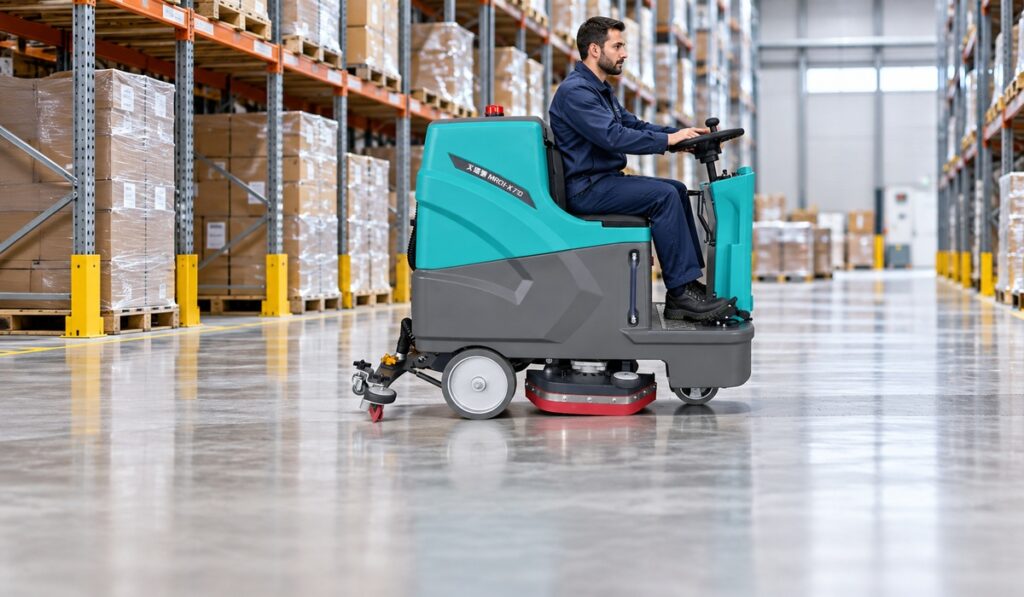
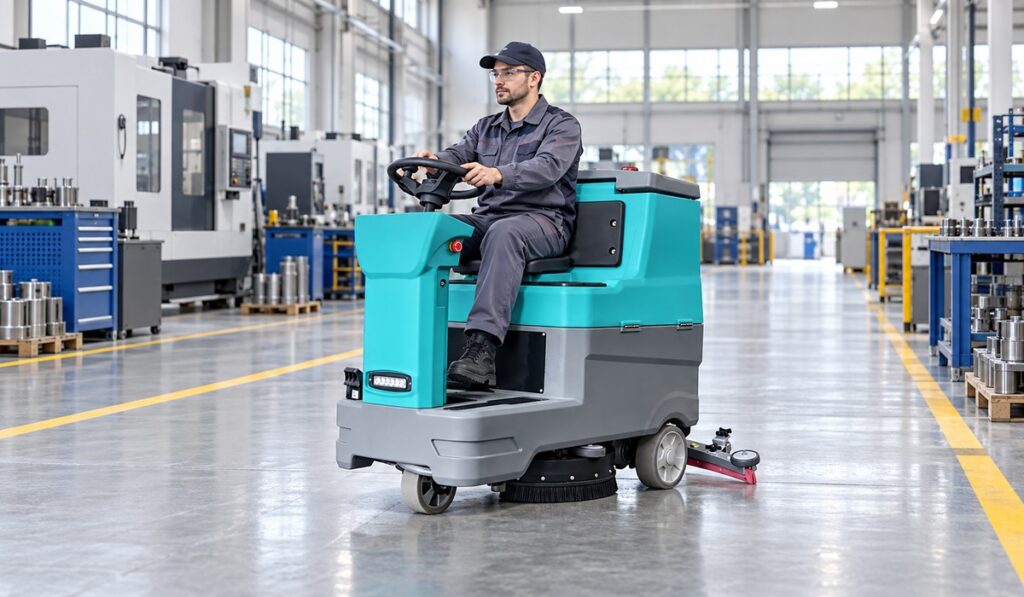
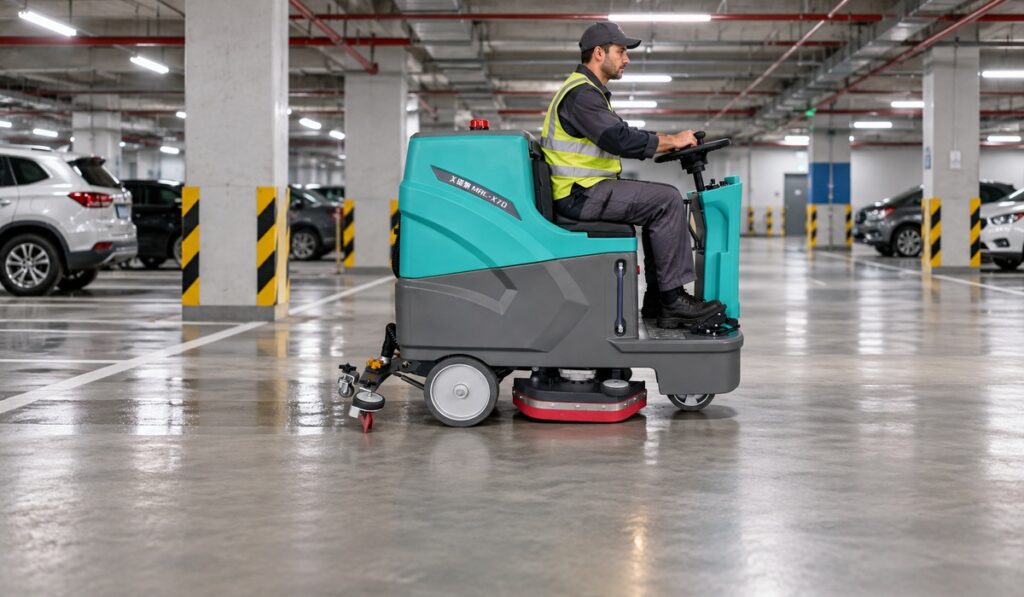
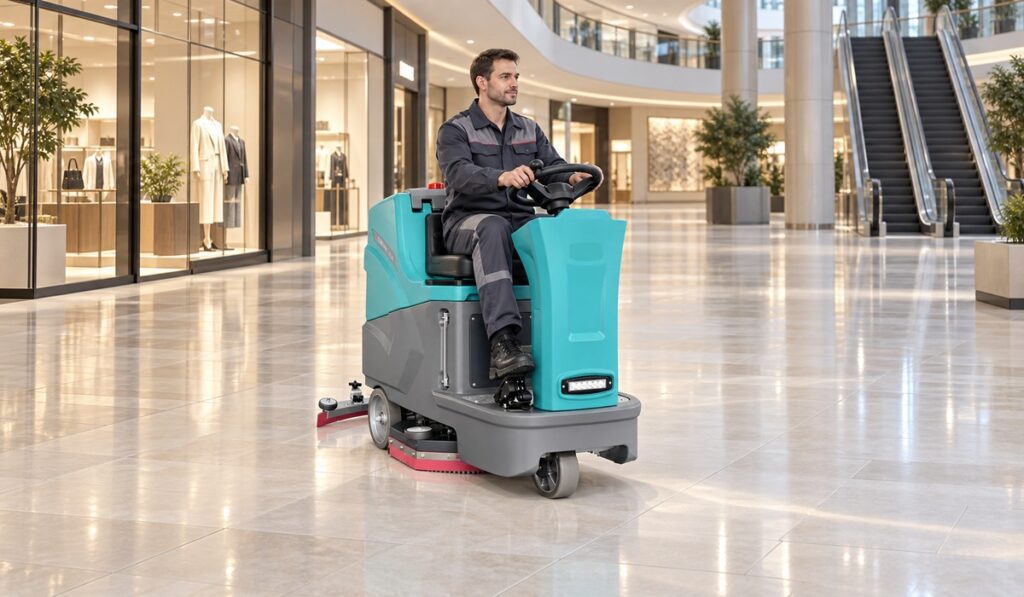
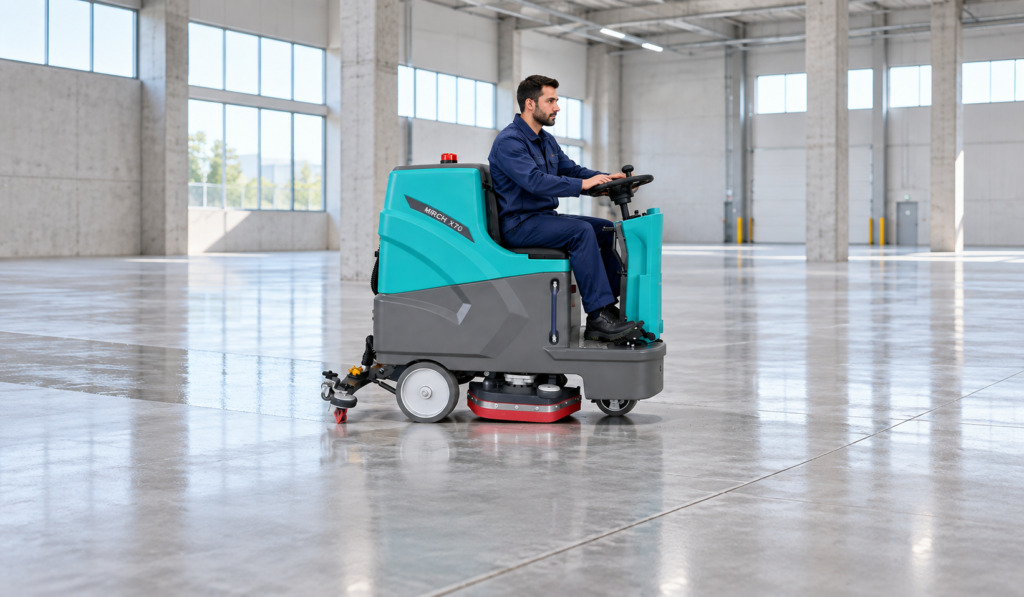
Match a seated scrubber to the route: long warehouse aisles, accessible factory floors, parking lanes and spacious mall concourses. These application illustrations show typical settings; access and floor suitability still depend on the selected machine and site.


Plan accessible concourses and quieter cleaning windows.
View application →
Match the brush, detergent and water use to the floor finish.
View application →A clear site brief helps the factory review a useful model configuration and quotation.
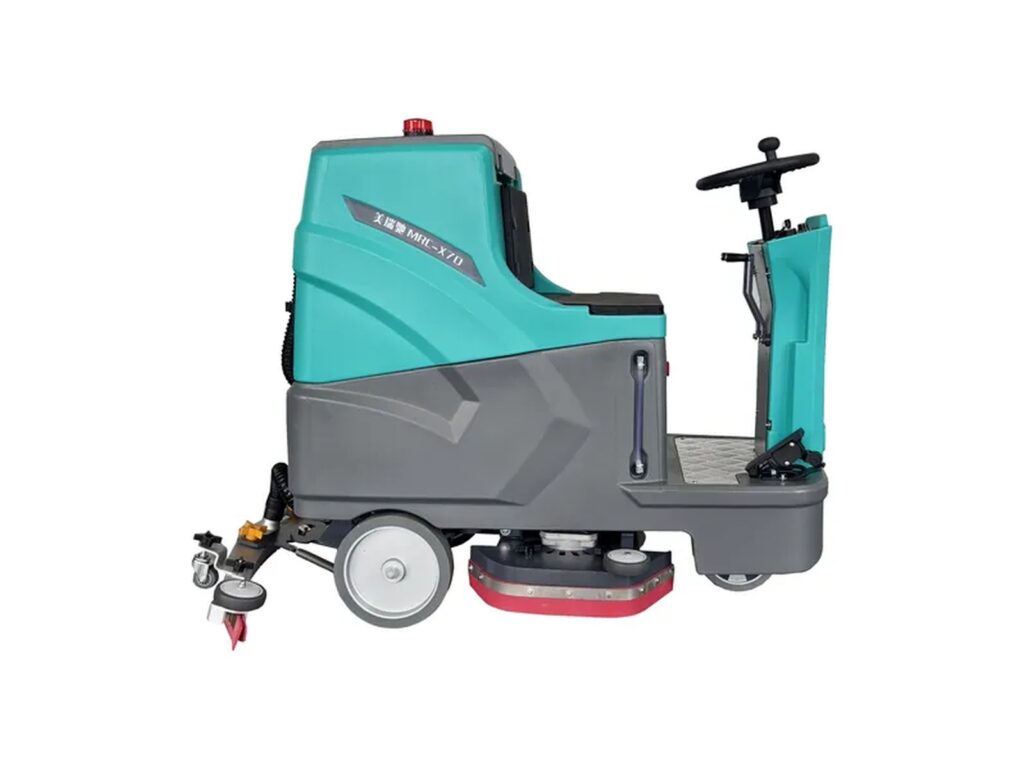
Record the cleaning area, surface, debris, door clearances, turn locations and the time available. Include filling, draining and charging points.
Compare tank pairs and listed runtime with the model finder. Check overall dimensions, turning space and laden weight before moving to a final configuration.
Agree the battery and charger, brush or pad, squeegee, accessories, branding and model documents. Resolve any unclear values before the order is finalized.
Confirm quantity, packing, destination and commercial terms. Prepare operator training and routine care using the instructions supplied with the actual machine.
Answers for facilities teams and B2B buyers selecting a seated industrial floor scrubber.
Consider a seated machine when the route includes long distances and accessible open floor areas. Check doors, turns, pedestrian traffic and service access before choosing. For narrow or obstructed routes, also compare walk-behind floor scrubbers.
The page compares X70, X80, SX90, X90, X65, X86, X75, X58 and X1020. One listing represents each model family. Open the product page for its source specifications and ask MRCH to confirm the configuration you intend to order.
The solution tank carries clean water and the specified cleaning mixture. The recovery tank collects dirty liquid. An 80 / 85 L entry means an 80 L solution tank and an 85 L recovery tank, not a single 165 L tank. Plan suitable filling and emptying points along the route.
No. Tank capacity is one part of the choice. Compare refill intervals with overall dimensions, loaded weight, available storage and turning space. X70 and X58 list 80 L solution tanks, while X1020 lists 280 L; the appropriate choice depends on access and the cleaning task.
Use it as a starting reference. The listed figures depend on the model and supplied battery configuration, and actual results vary with load, settings and battery condition. Some model records do not provide a clear runtime, so the filter marks them as needing confirmation rather than estimating a figure.
Request the selected model dimensions and turning-space information. Include the fitted squeegee and other protruding parts when measuring access. Check lifts, corners, ramps and transitions separately; there is no single clearance figure that applies to every ride-on scrubber.
No. The brush or pad defines the scrubbed path; the rear squeegee collects dirty liquid and can be wider. Confirm both values and the overall machine width. Where a listing uses unclear width labels, request a confirmed dimension drawing instead of using that value for access planning.
Suitability depends on the floor finish, condition, water tolerance, cleaning tool and detergent. Follow the floor supplier’s care guidance and test the proposed process on a small area. See concrete floor cleaning for the next selection step.
Follow the selected model manual. Before use, check the machine condition, battery state, fitted cleaning tool and intended route. After use, follow the instructions for emptying and rinsing tanks, cleaning the recovery system and inspecting the squeegee. Confirm the appropriate charging routine for the supplied battery.
A scrubber dryer performs wet floor cleaning and liquid recovery. Loose debris may require a separate preparation step. If dry litter collection is part of the task, compare ride-on floor sweepers as a separate machine category.
Provide your model shortlist, quantity, destination, cleaning requirements, battery preferences, branding and packaging needs. Request the model documents and consumables list. Available options and commercial terms are confirmed by MRCH for the specific order.
Return to the full scrubber range, compare walk-behind access, or explore machines for separate dry-debris tasks.

Compare the complete ride-on and walk-behind range.
Compare Scrubber Models →
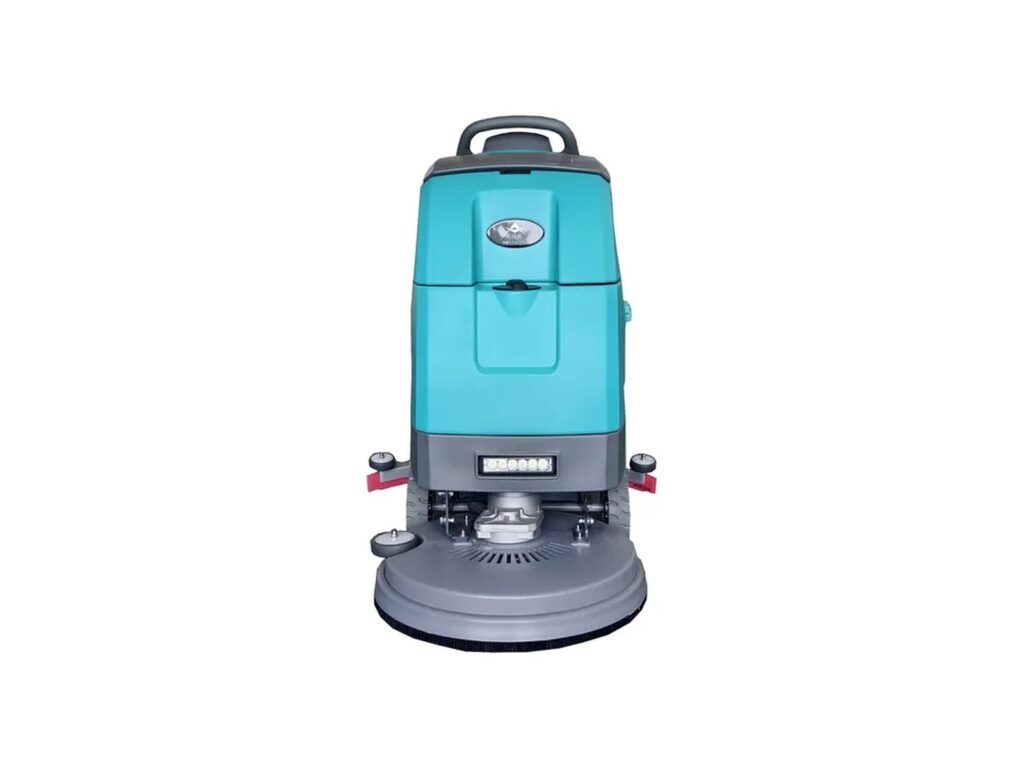
Explore operator-guided machines for restricted routes.
Explore category →
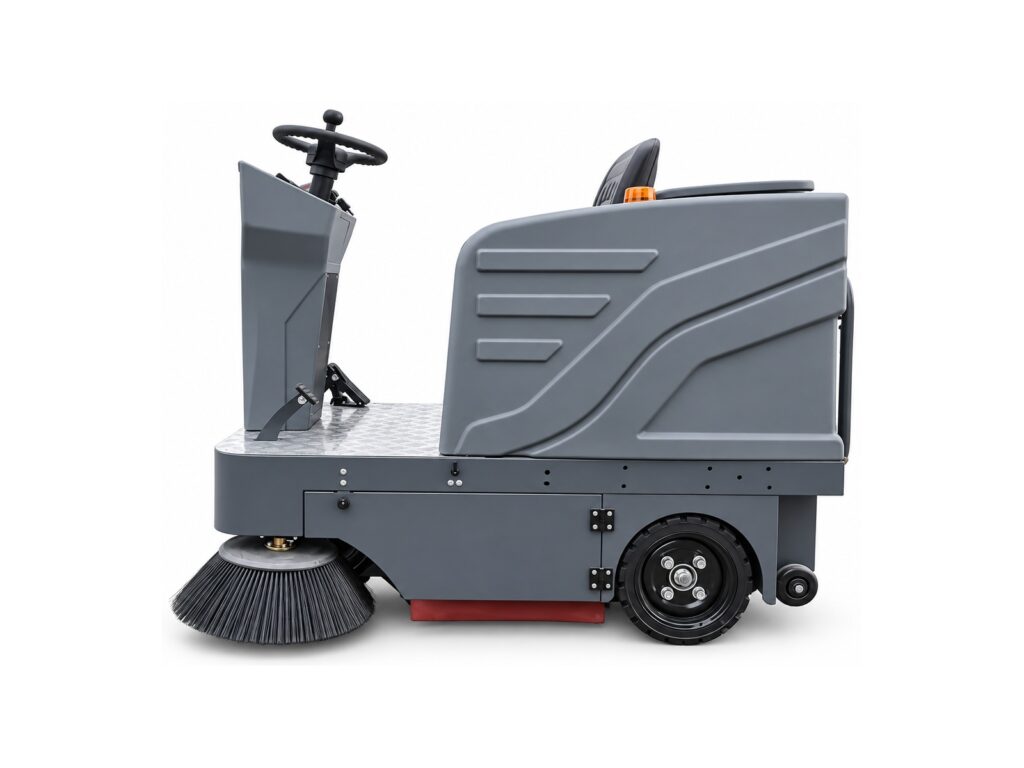
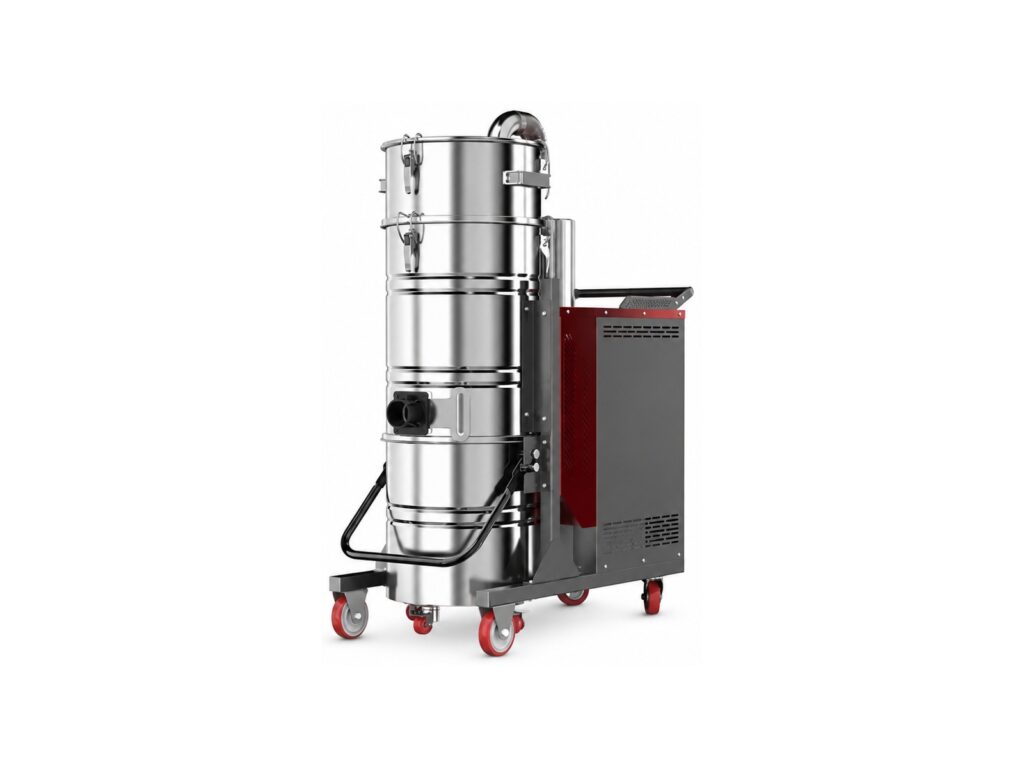
Tell us your floor area, surface, cleaning requirements, quantity and delivery market for a suitable machine recommendation and quotation.